September Towels At Last

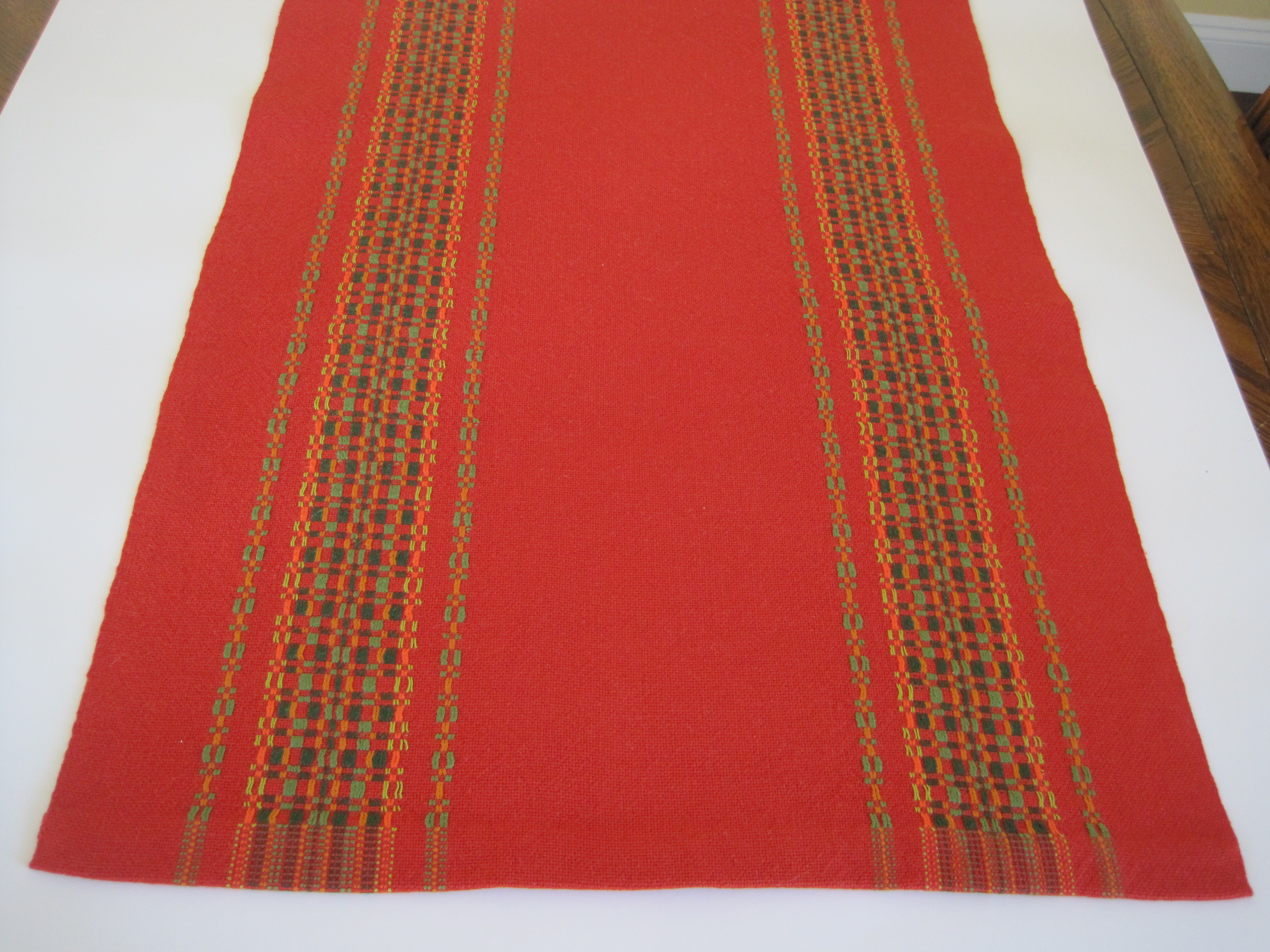
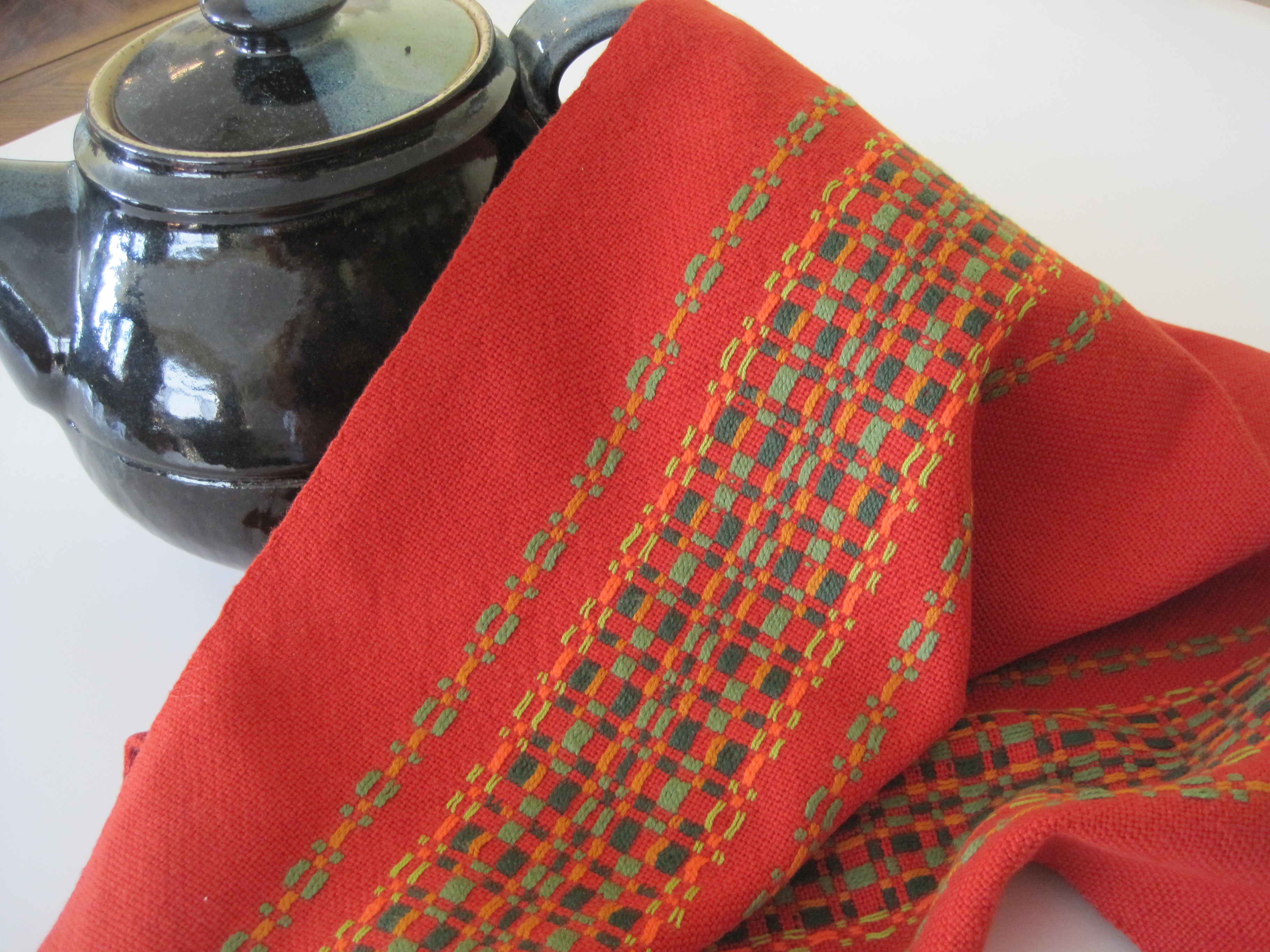
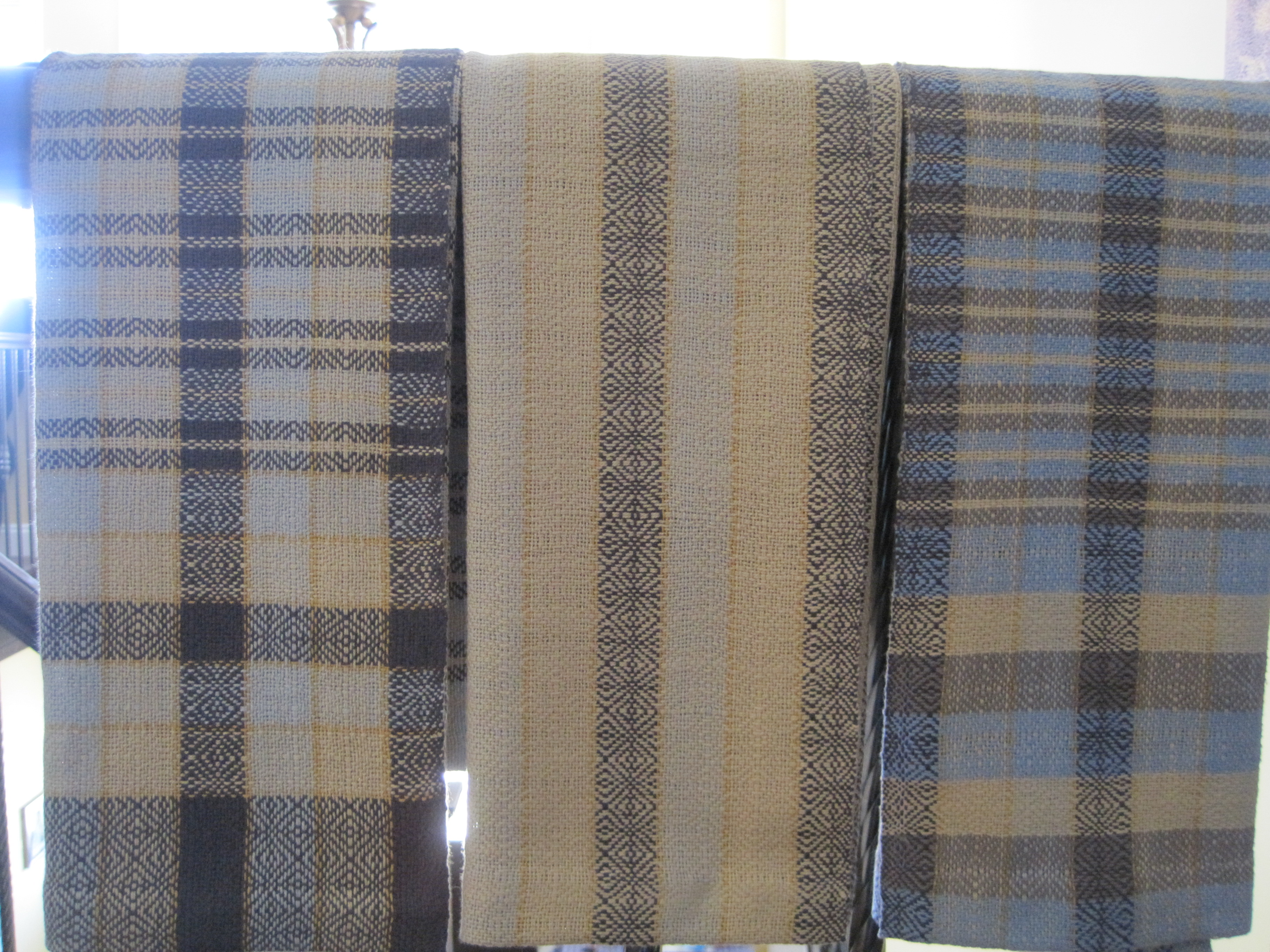
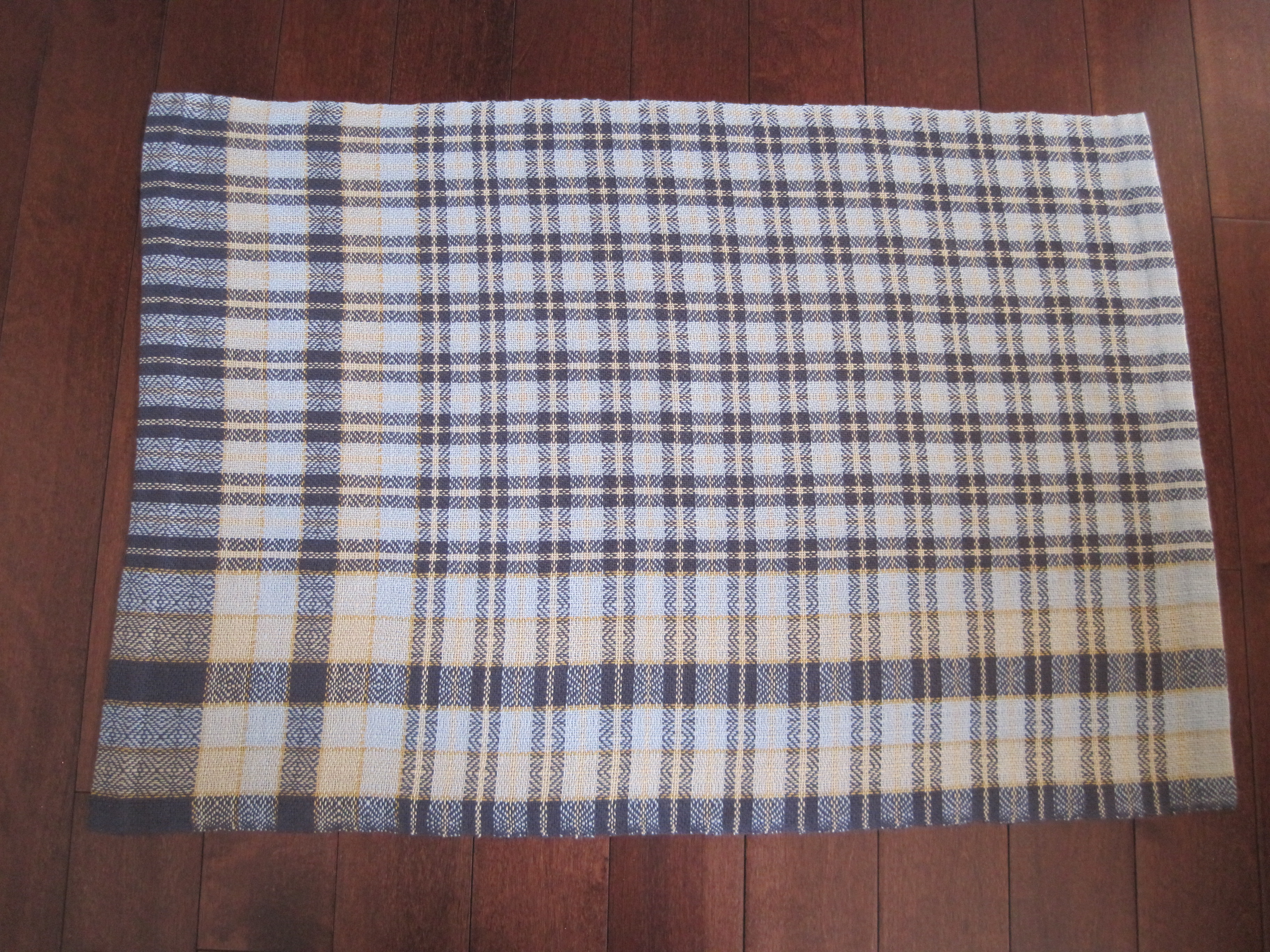
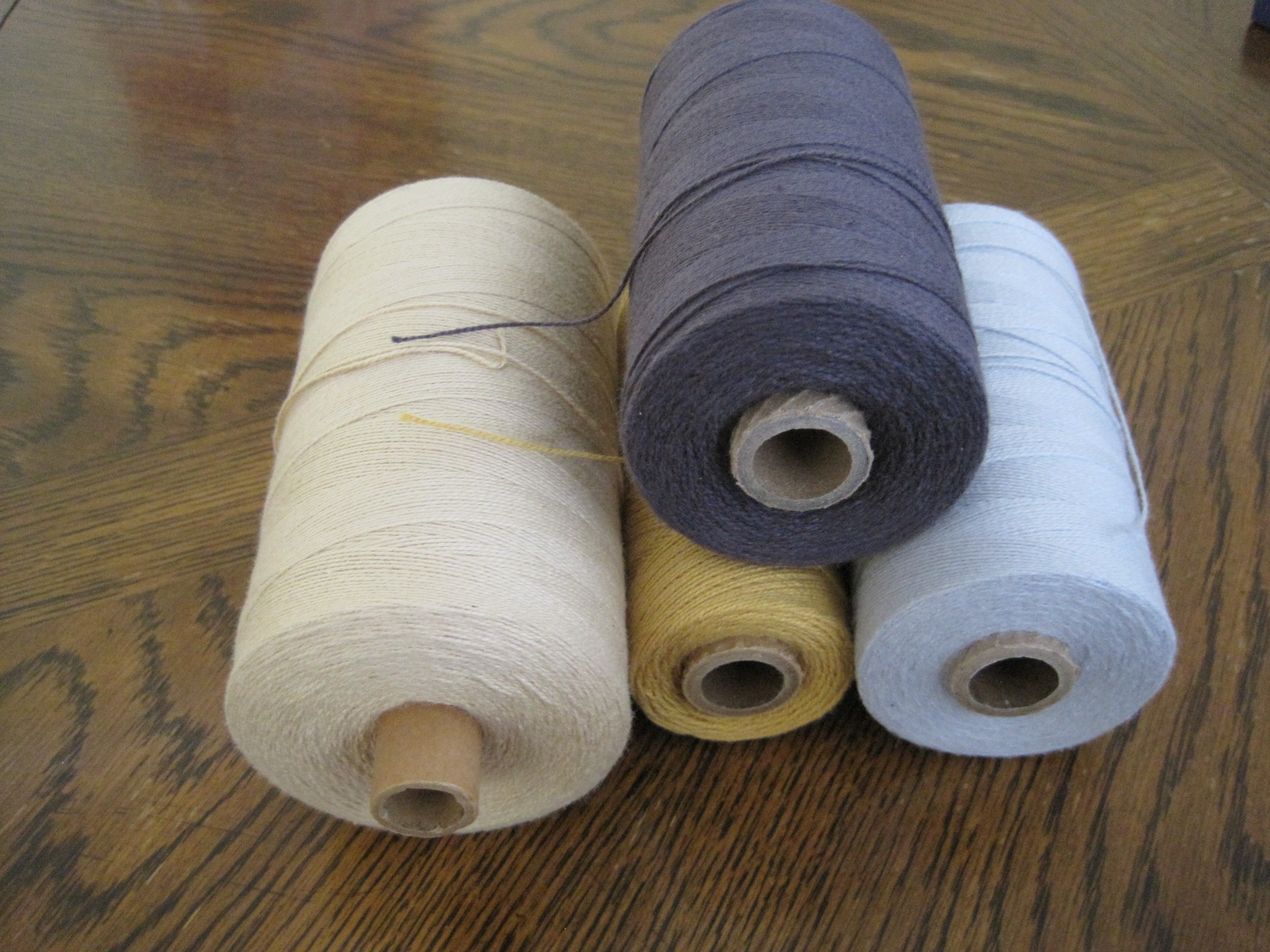
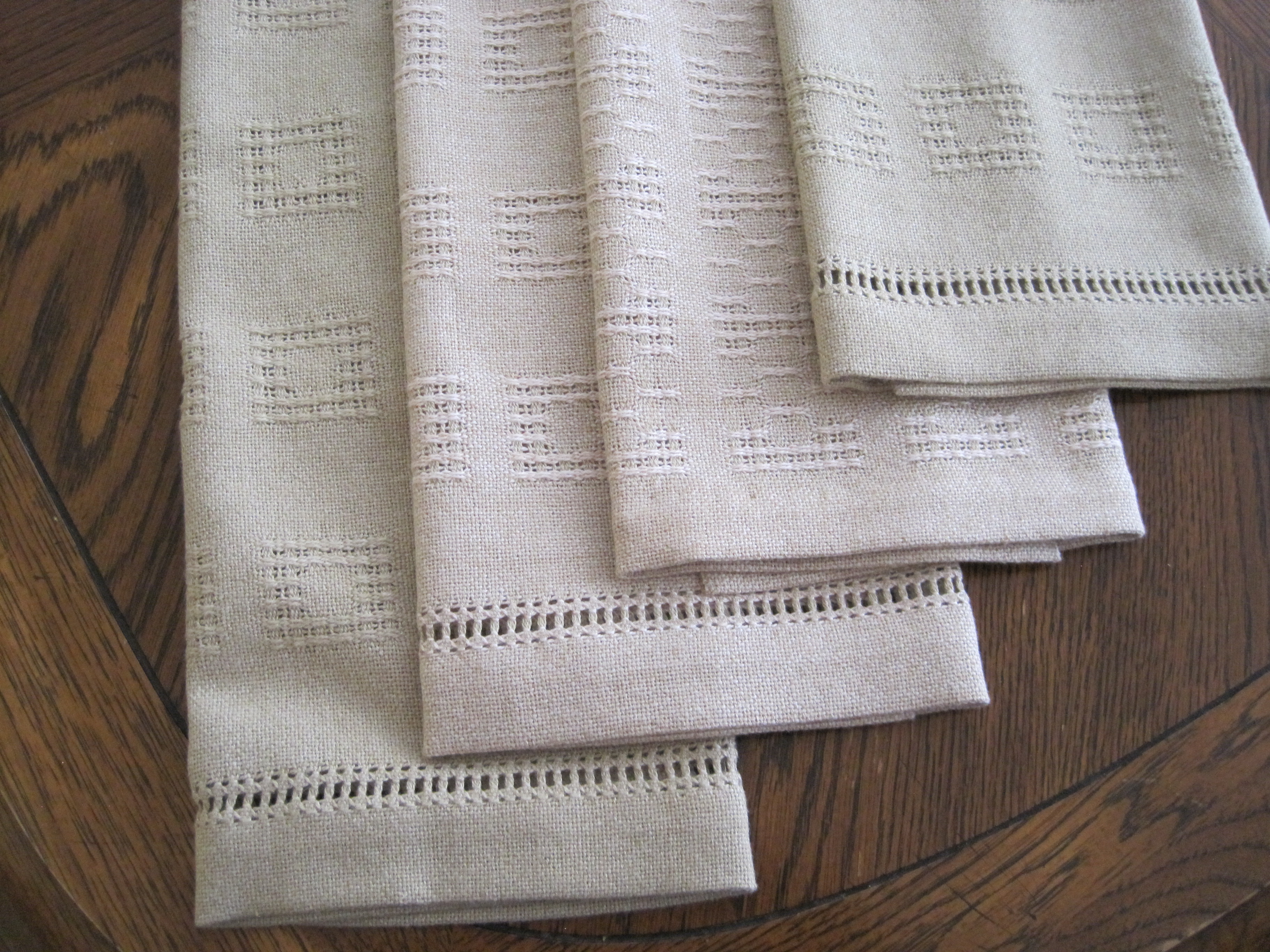
The September towels are such a great representation of Autumn.

IMG_3405  IMG_3406  IMG_3409

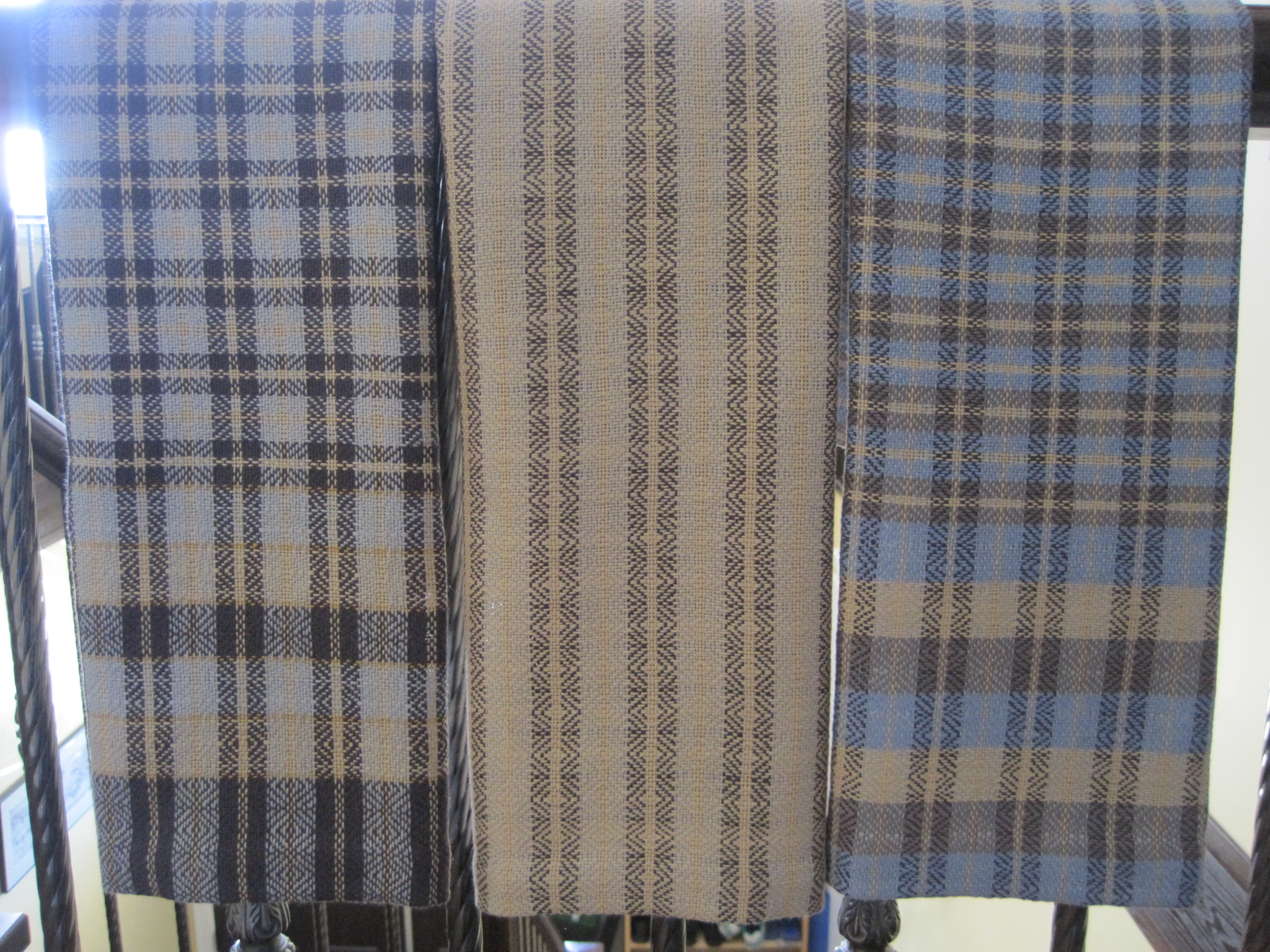
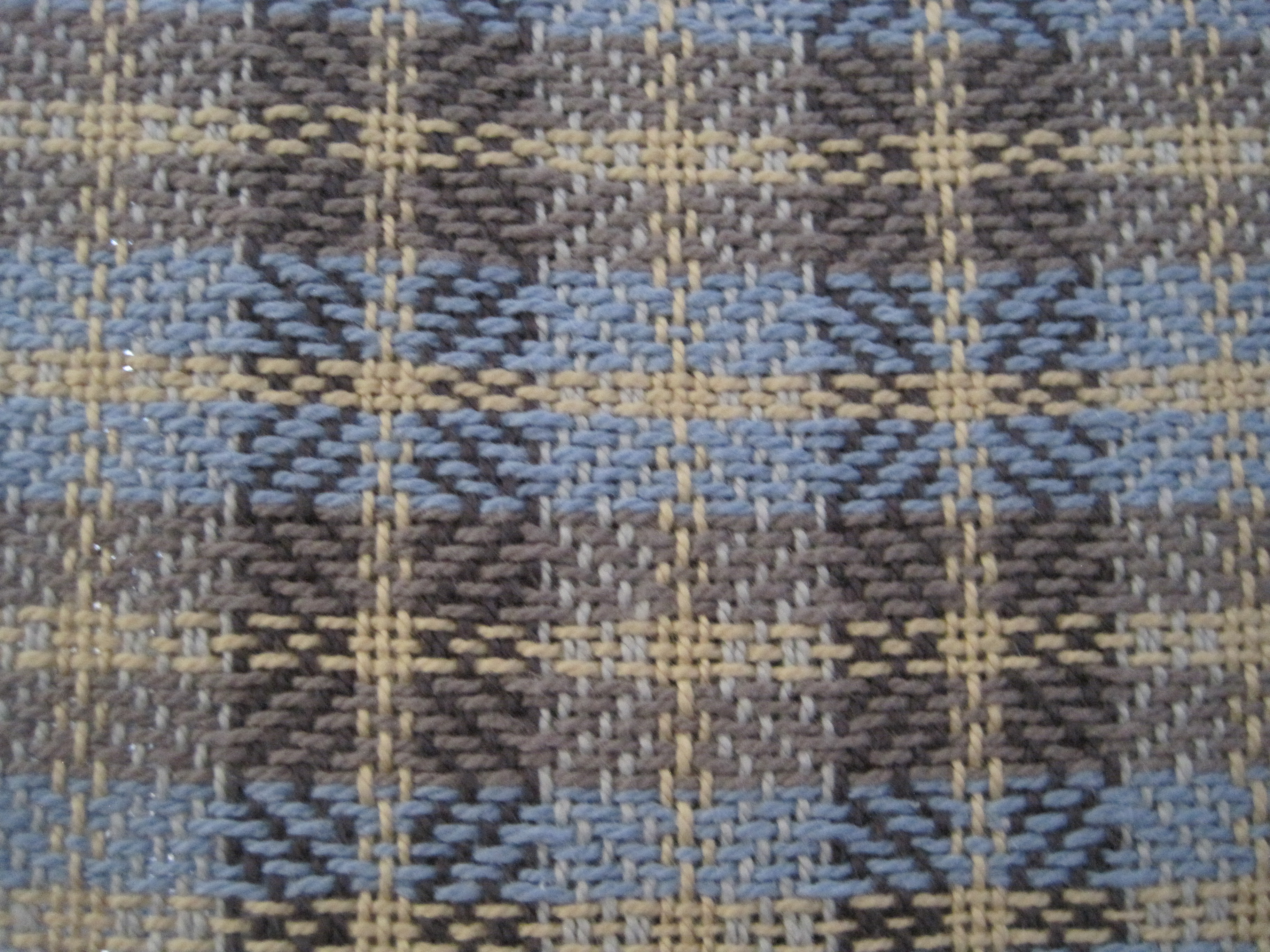
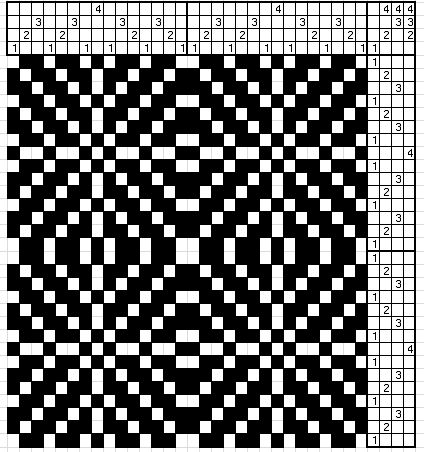
Easy weaving, in Turned Monk’s Belt, since all the work is in the warping.  Once on the loom they wove up quickly and it was an easy pattern to follow.  I set these towels at 20 epi, which makes them a little heavy for tea towels.  If I were to do it again, I would adjust the sett to 18 epi, and adjust the striped pattern accordingly, because I still like the proportion of pattern to background.

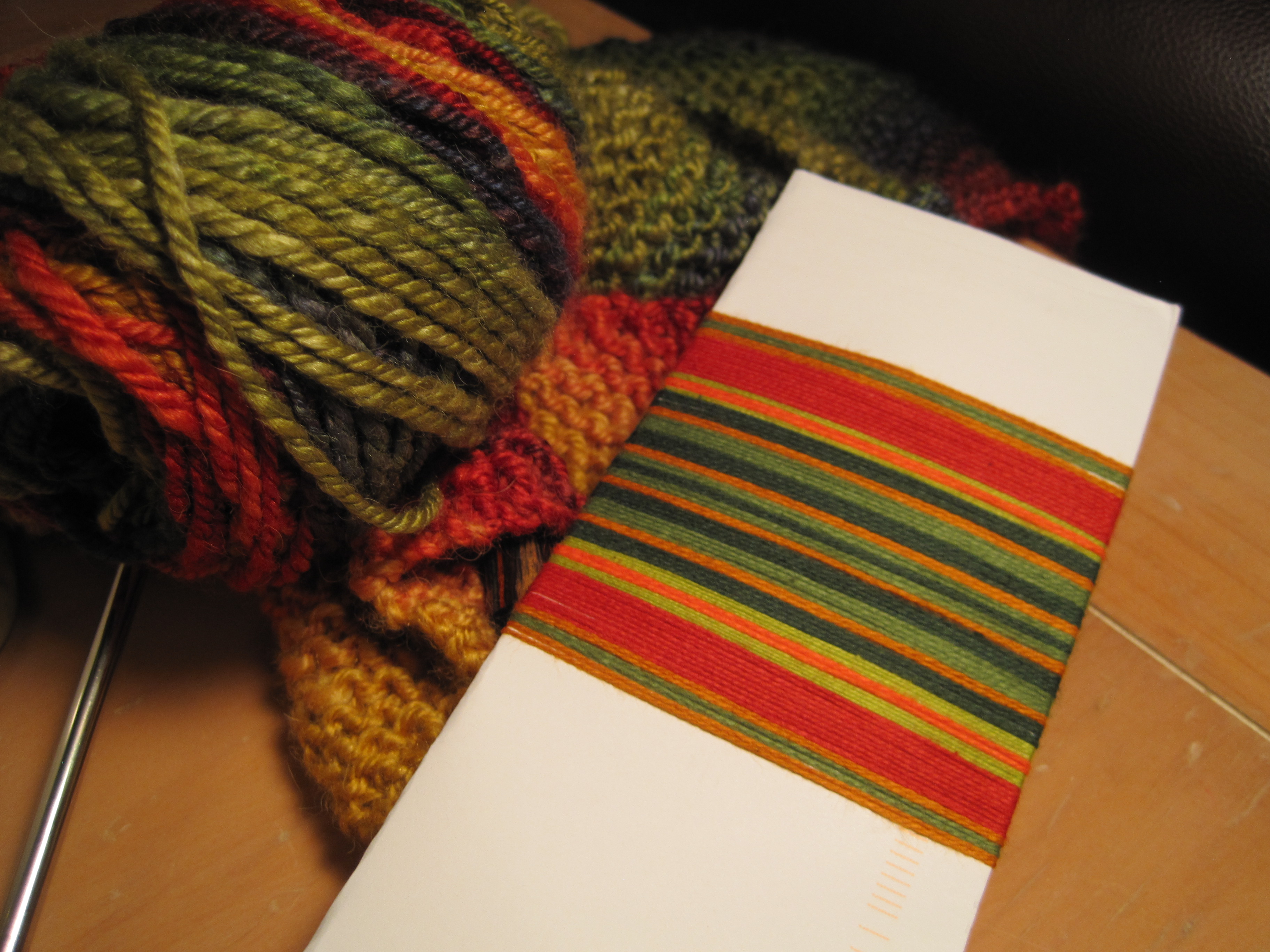
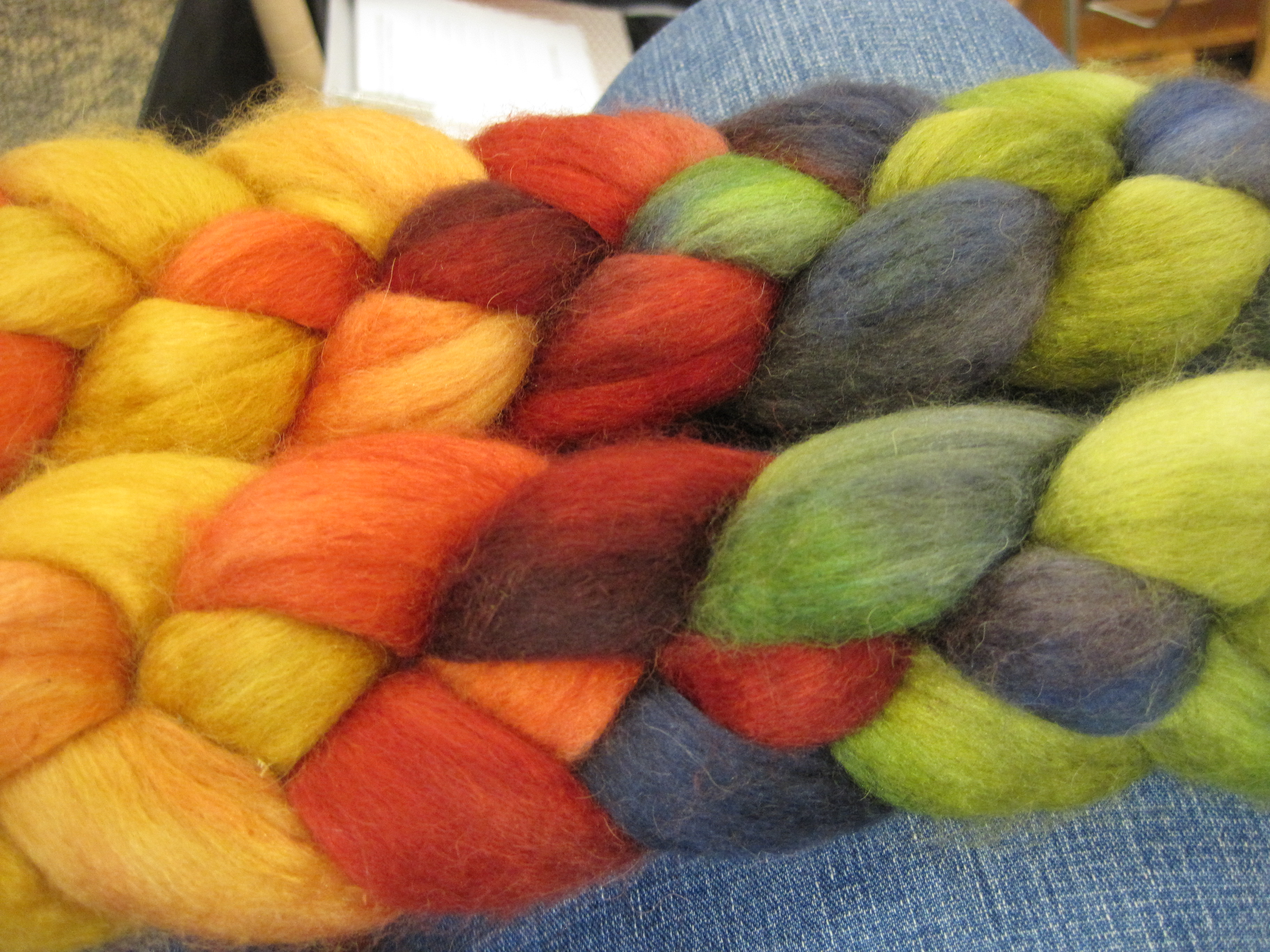
Isn’t it funny how one thing in your life echoes in another, without you realizing.  I was surprised to find that I am using similar colours in my spinning at the same time.  Here is they yarn wrap from my towels and my spinning/knitting project.

IMG_3340  IMG_3292  IMG_3338

Ah, the mind, what a wonderful tool!

Posted in knitting, Spinning, Weaving | Tagged , , , , , , , , , , , , | 5 Comments

Icelandic Sheep fleece study

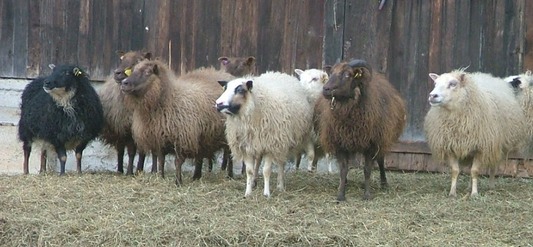
Icelandic sheep

I joined a spinning study group – two days to focus on spinning fleece from one breed of sheep.  Our study for September 2015 was Icelandic Sheep.  What a lovely range of colours.

Judith presented background information on the history of Icelandic sheep and the culture and environment found in Iceland.  She researched reputable sources to provide accurate information.  Icelandic sheep are a primitive breed that is reported to have arrived on Iceland with the Vikings in around 800 AD and they have survived in relative isolation since then.  The isolation and strict agricultural restrictions of Iceland are probably responsible for this breed’s lack of immunity to many diseases.

Icelandic sheep were successfully imported to Canada in 1990 under strict regulations and these sheep thrived and provided the foundation breeding stock for all Icelandic sheep in North America today.

Icelandic sheep are dual coated, with a long, wiry outer coat called tog and a short, soft, downy  undercoat called thel.  The combination of these two coats allow the sheep to survive the strong winds and heavy rain that is common to Iceland.  Both parts of the fleece can be spun, separately or together to create a wide variety of yarns.  Fleeces come in a wide variety of colours in the tog, in the thel, and in the colour, pattern, and spotting that occurs on each individual sheep.  The outer coats can grow up to 18 inches per year, so the sheep are usually sheered in Spring and again in Autumn.

After this lovely introduction we had the opportunity to play with some Icelandic Sheep fleece.  We were exposed to five unique sheep of the Icelandic sheep family, raised on the British Columbia Tideview Farm of Jane Hutchins & Robert Byers.

Mary and Cheryl presented different methods of preparing and spinning the different fleeces.  We had individual bags of each sheep’s fleece, more than enough for two days of spinning and lots for homework as well.

Charles

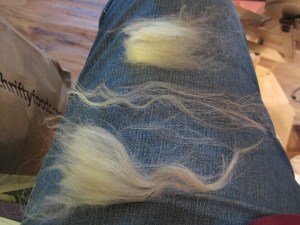
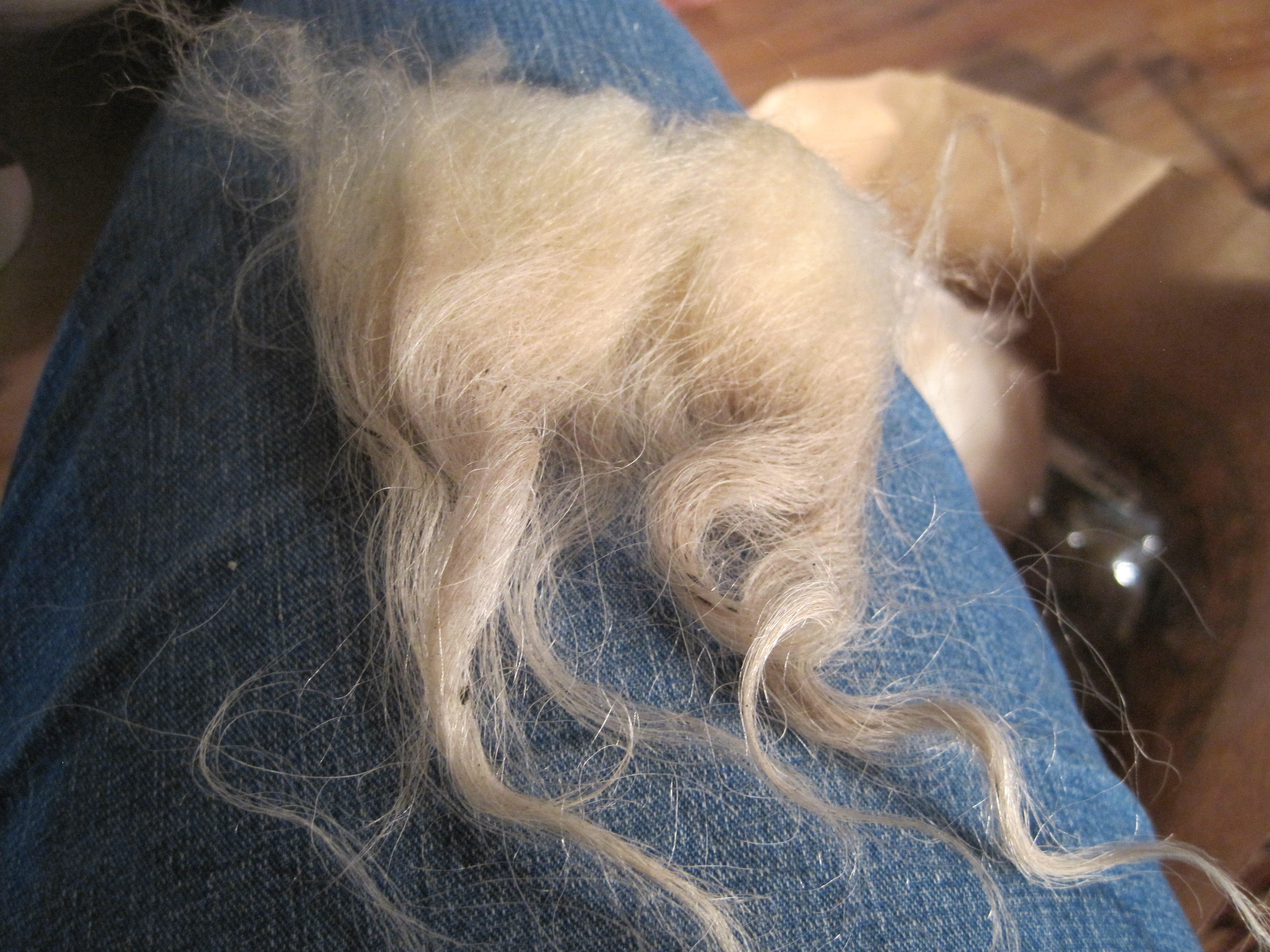
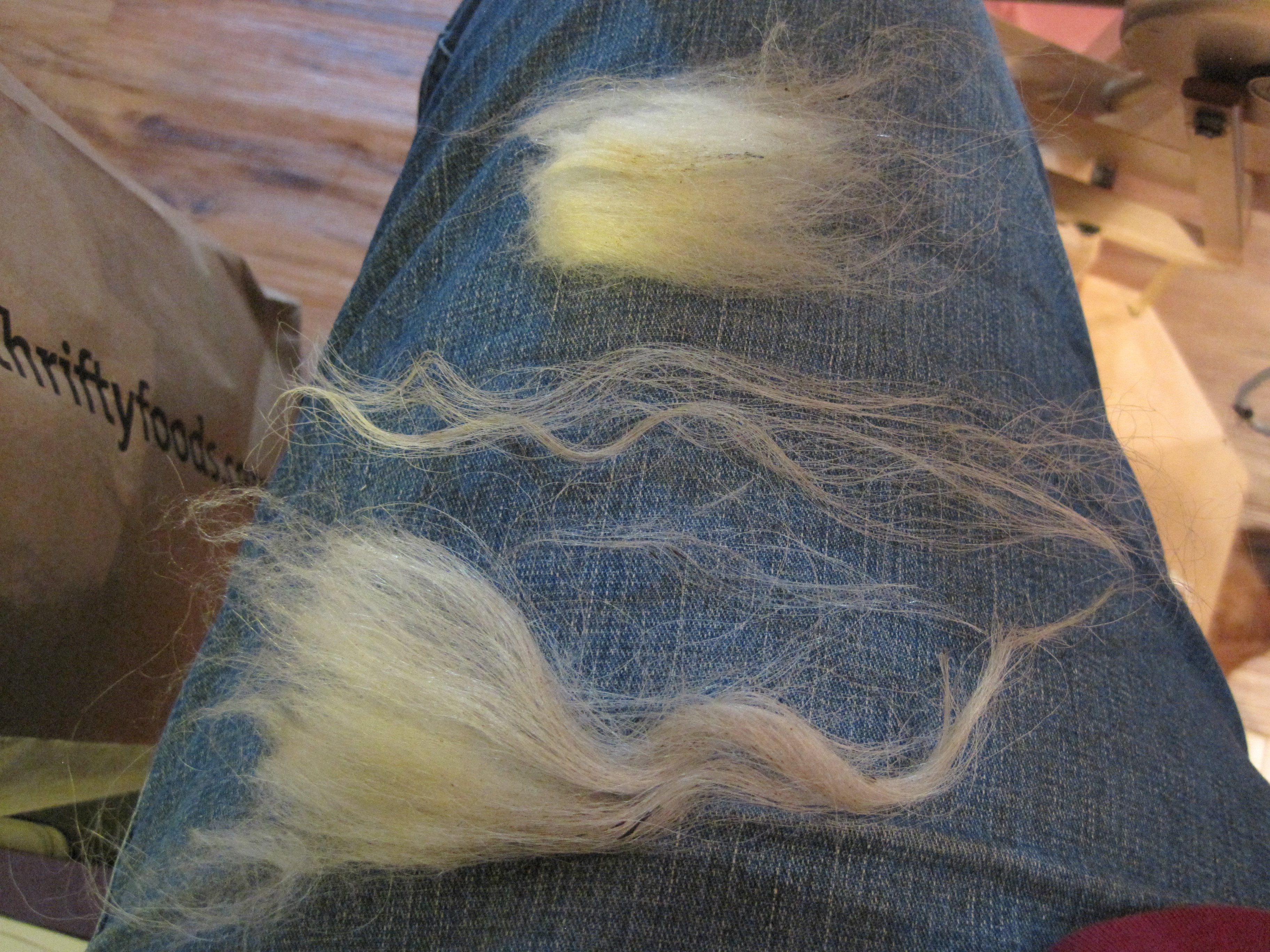
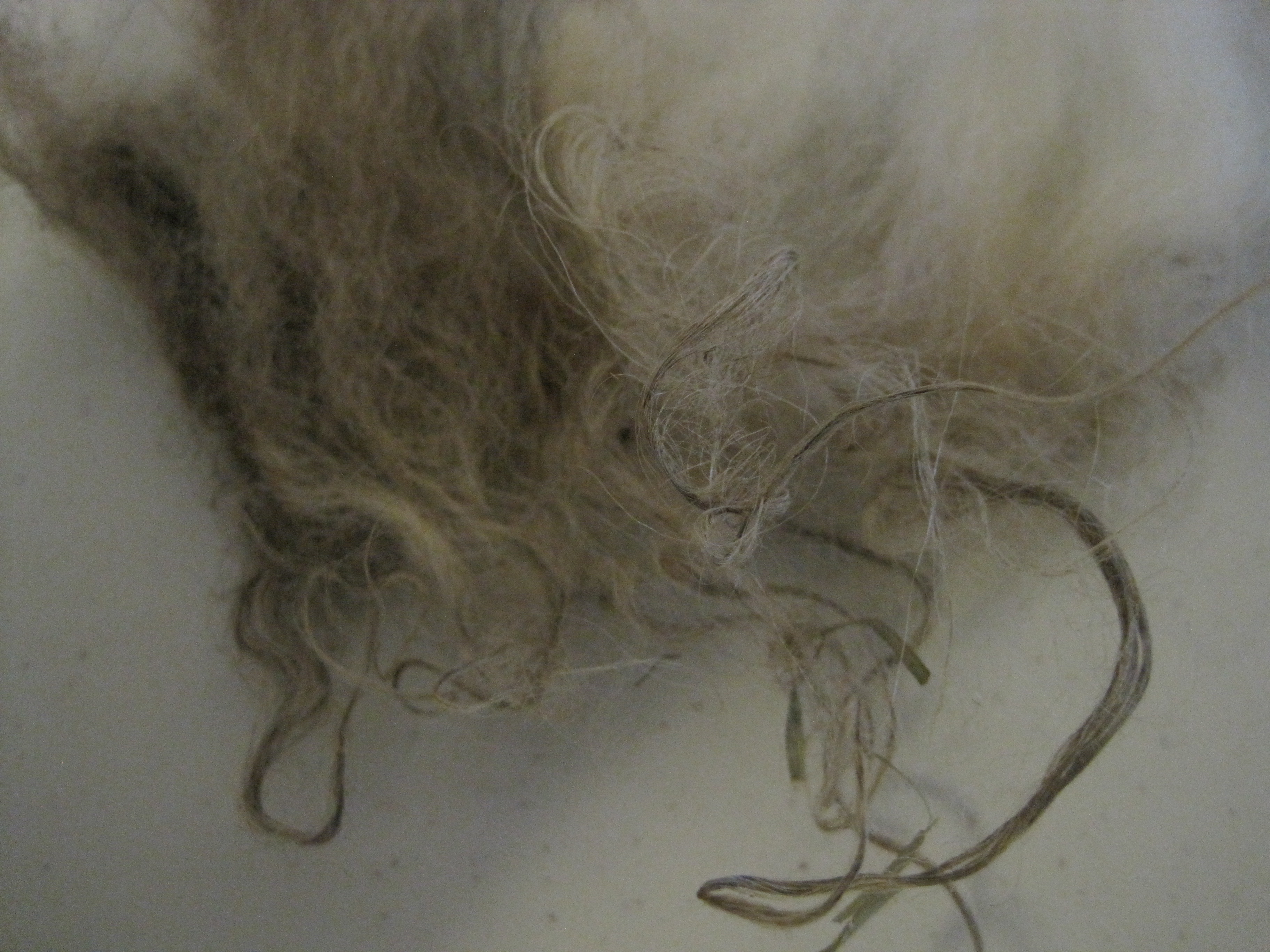
First up was Charles, a white 5 year old ram.  The fleece had a white thel, and a mostly white tog, although some grey tog was also present.  The left photo shows some locks picked from the fleece.  The right photo shows (from the top) thel, tog and full lock.
IMG_3381  IMG_3383

My samples were spun:

i) a worsted 2 ply, short forward draw, with both coats, fibre just picked apart.

ii) worsted 2 ply, short forward draw, both coats together, carded on wool cards

iii) semi-worsted, 2 ply, short backward draw, with both coats carded together on wool hand cards.

iii) woolen long draw, mostly thel with longer tog picked out, carded on wool cards

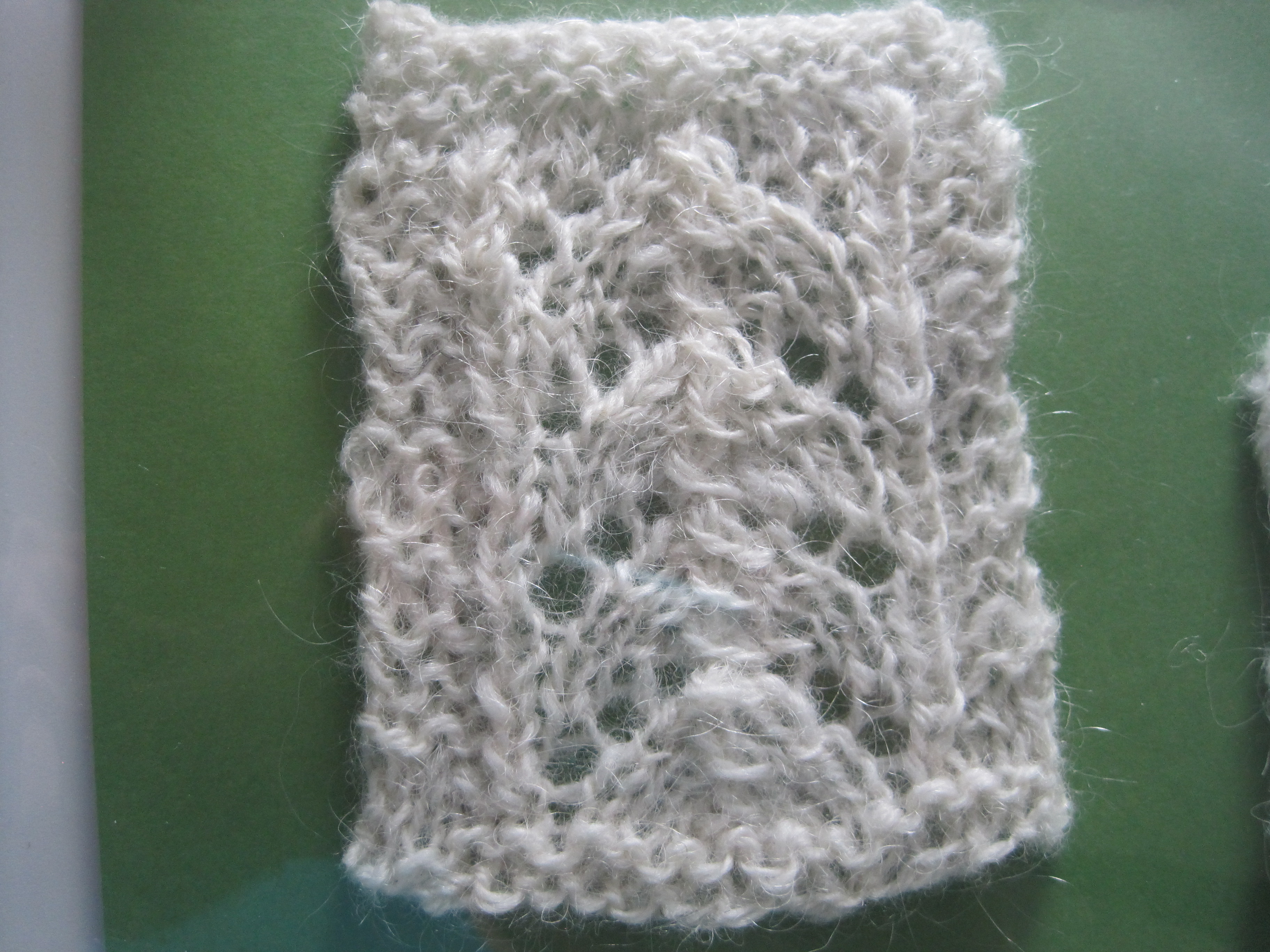
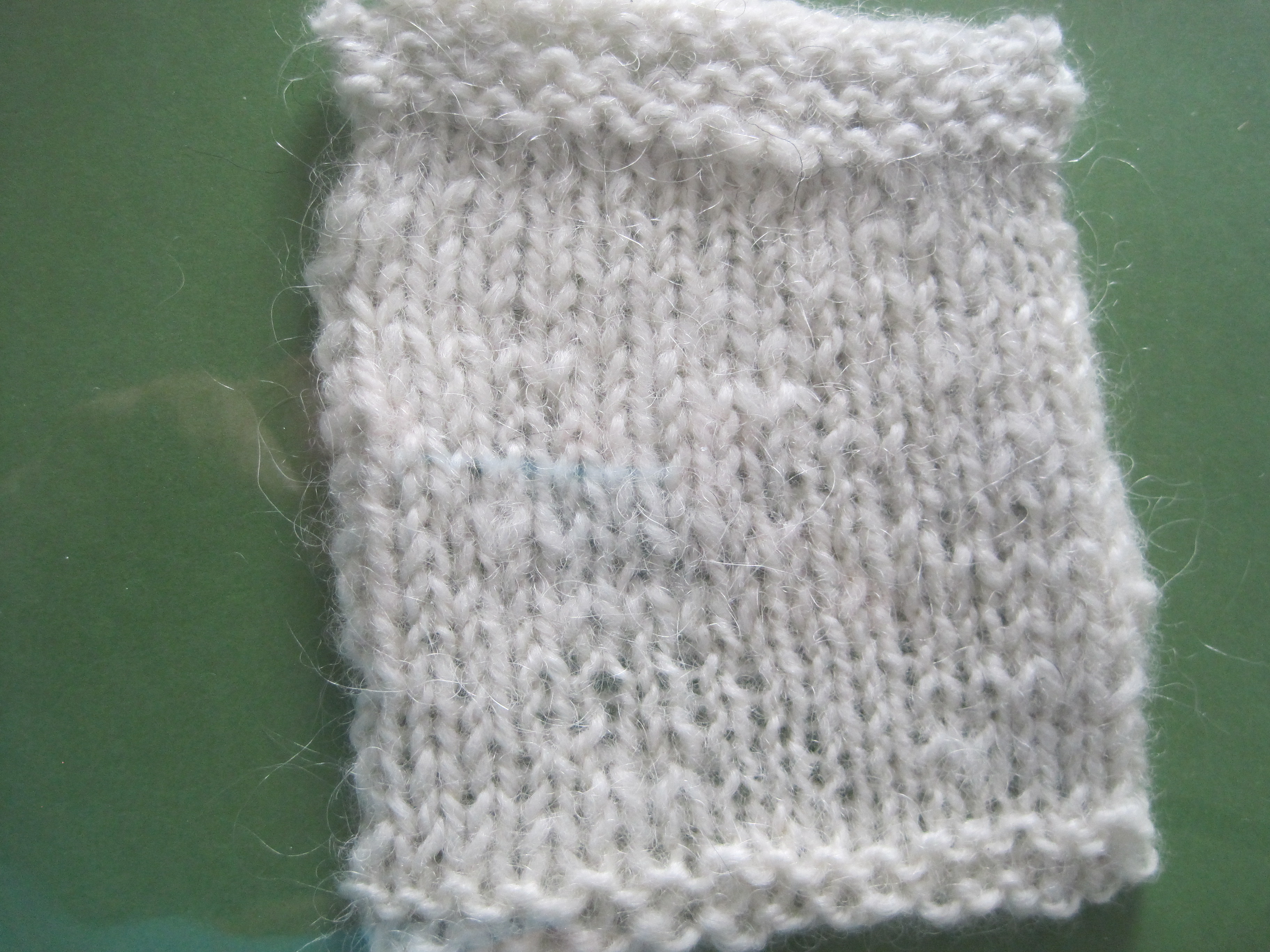
I spun and knit some small samples to see how the yarn would behave.  The combined yarn with tog and thel just picked and spun has a nice crispness for knitted lace.  The carded sample is dense and warm, good for an outdoor winter sweater or mittens.  The yarn from Charles washed up to almost white with a few of the darker tog showing up occasionally.
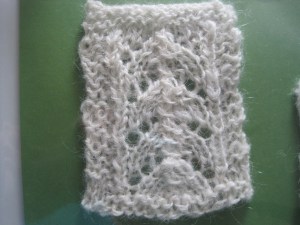
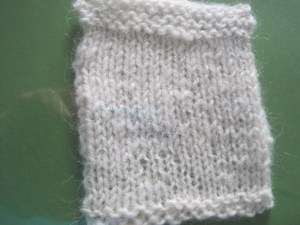
IMG_3389  IMG_3390

Janet

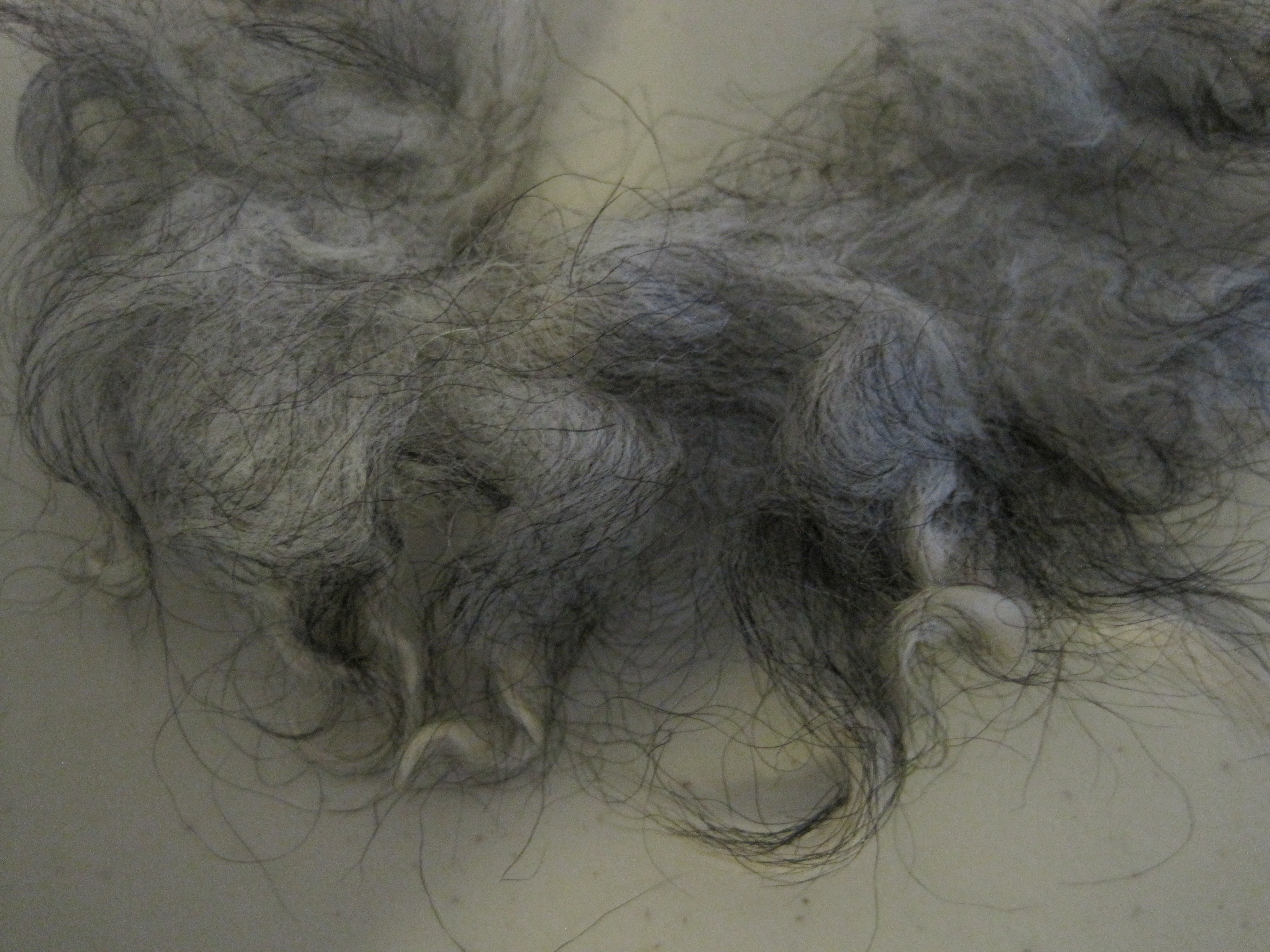
Janet is a Ewe lamb, grey thel and a mixed grey, white, black tog. Janet is young, bouncy and lively to spin.
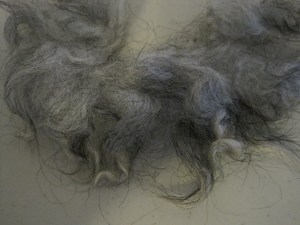
IMG_3391

Samples from Janet

i) The white and grey togs, which were longer were pulled out. The black togs were the same length as the thel and I was unable to pull them out easily. The thel was carded on wool hand cards and any resulting neps and lumps were discarded.  The thel (with black tog) was spun 2-ply woolen with point of contact long draw.  Easy to spin and the resultant yarn is soft and hairy.  Could be used for a sweater.

ii) the white and grey togs were spun as 2 ply worsted. Resultant yarn is strong and smooth.  Could be used for warp.

Thuja

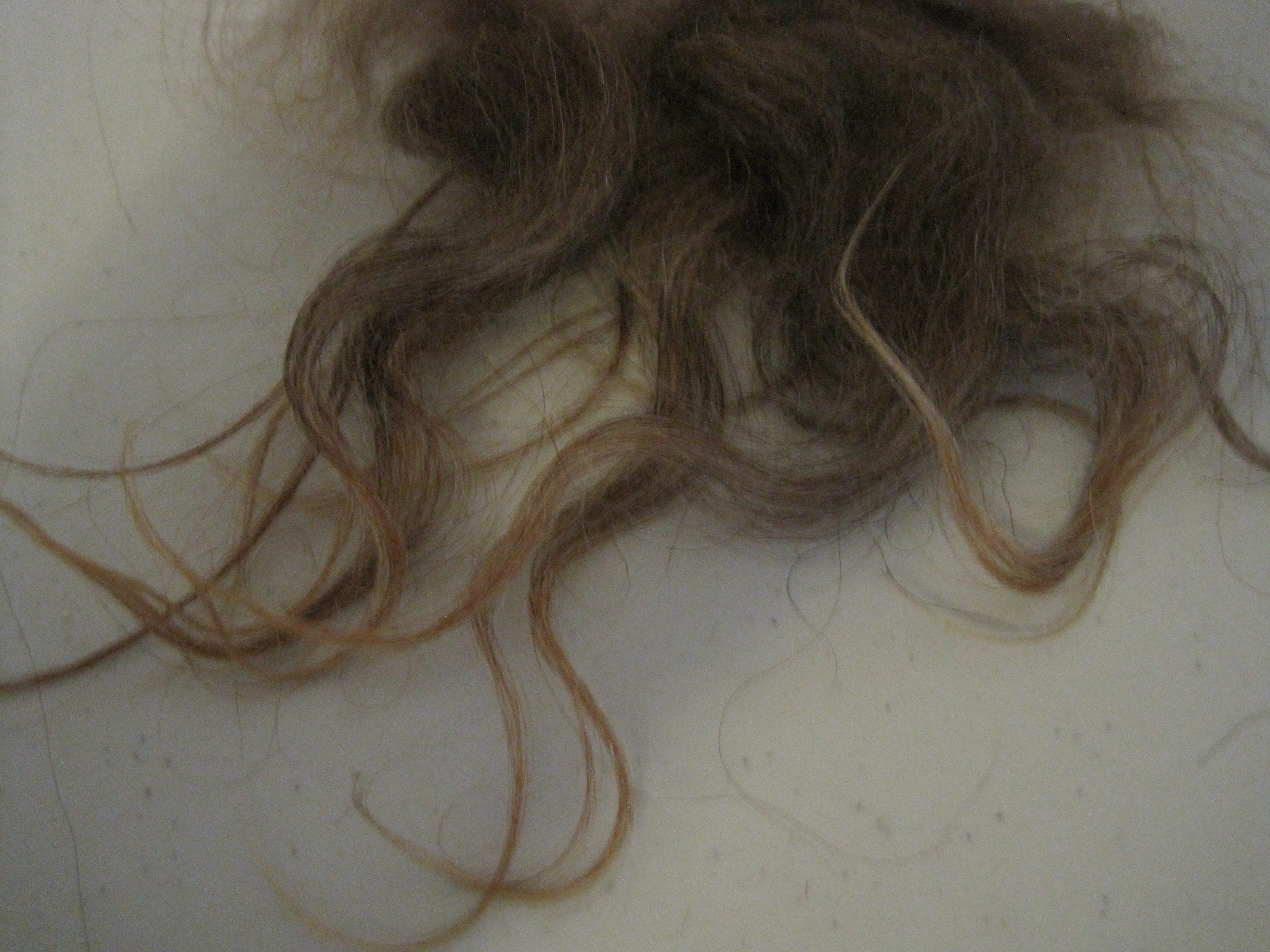
Thuja is a 3 year ewe, a moorit with brown thel and a mixed gold, brown, grey tog.  The thel is very soft, and the tog silky.
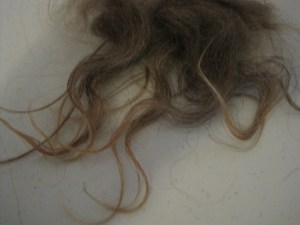
IMG_3392

i) the tog hairs were pulled off and the thel spun with supported long draw, 2 ply.  Resultant yarn could be used for a lace shawl or used in a sweater.

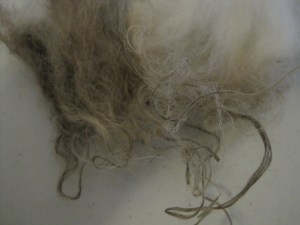
Ghost

Ghost is a ram lamb, mostly white, with white thel and mixed white, grey tog, but also has some darker areas
IMG_3393

i) the tog was separated out using the edge of the wool card, resulting in a soft thel cloud. The thel was carded and spun worsted from the rolag. The resultant yarn could be used for a lace shawl.

ii) the tog was opened on the wool cards and spun from the locks with the fibres held parallel. Spun worsted short forward draw and plied 2 ply.

And lastly

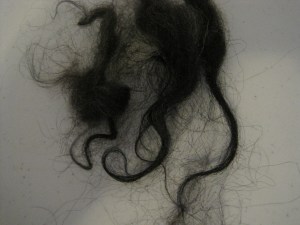
Claudia

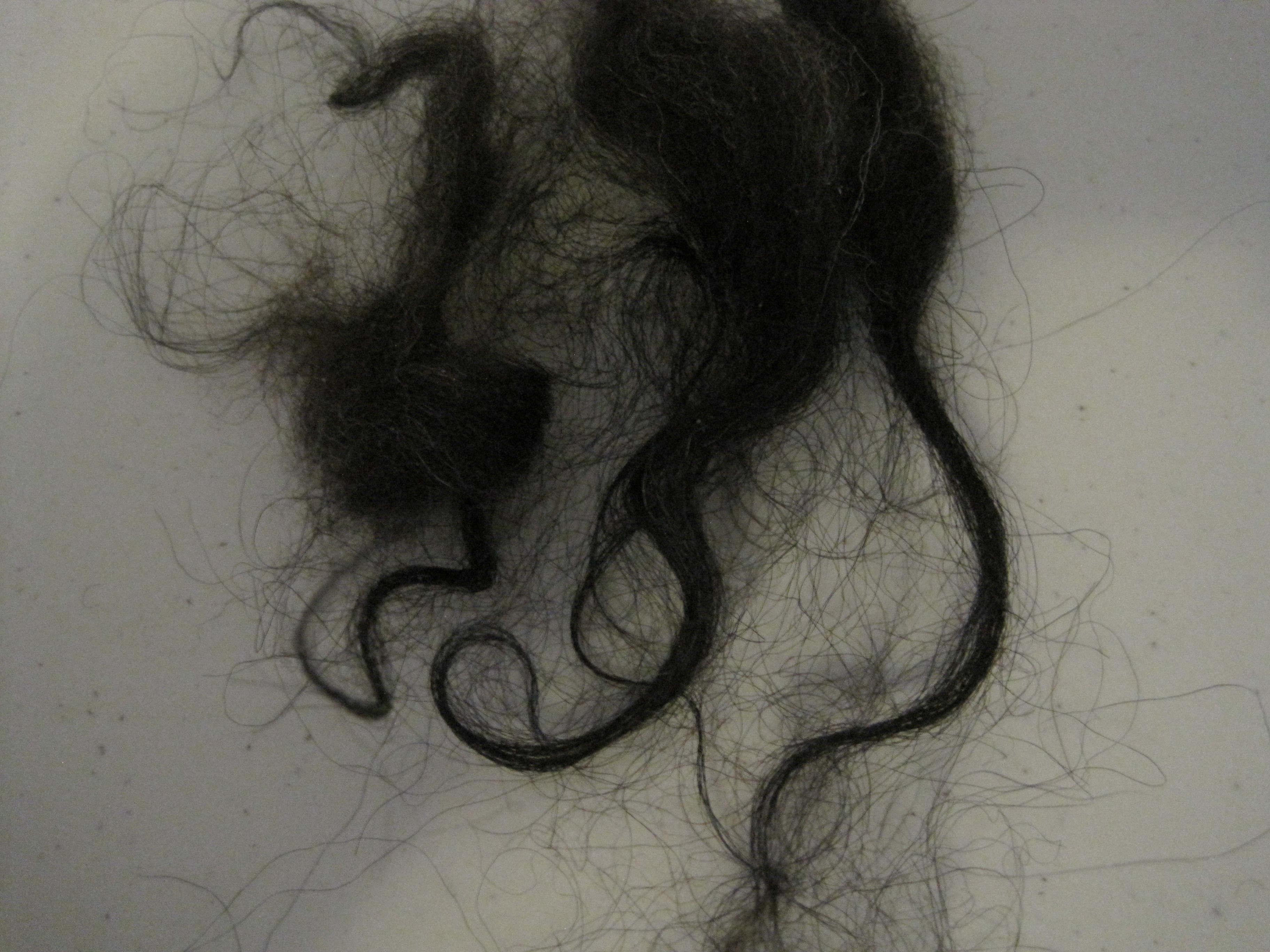
Claudia is a 2 year ewe with black thel and tog ranging from chocolate brown to black
IMG_3395

No samples spun yet.

The study was topped off with an introduction to Iceland’s knitting culture and traditions.  I think most of the yarn would be suitable for outer wear, not next to the skin.  If I spin enough I will make some Icelandic style mittens with all the colours included.

I still have a lot of exploring to do with these fleeces yet.
Posted in Spinning | Tagged , , , , , , , , , , , , , | 4 Comments

Fibre Focus 2015 – Lynden, Washington

Every two years, the Association of Northwest Weavers Guilds(ANWG) hosts a conference for the associated guilds.  For 2015 there was no guild willing to host a full conference, so the Whatcom Weavers and the Peace Arch Weavers joined together to host a mini-conference and thus Fibre Focus 2015 was born, and took place from September 9-12 in Lynden, Washington at the Jansen Art Centre.  My friend Susan and I decided to make a holiday of it, and stayed with her sister in Washington, rather than drive back and forth across the border each day.

Karen Selk, formerly of Treenway Silks was the keynote speaker, and presented a slide show of her travels along the silk trail in Asia and India. Her ability to travel to remote villages, and get up close and personal with the weavers, dyers, and silk producers brought the story of silk to life.  The highlight of the evening was a fashion show of some of her many textiles gathered throughout 30 years in the pursuit of silk.  Culture, geography, environment, politics and religion all become part of the story of the cloth.

Thursday, Friday and Saturday involved workshops, gallery visits, vendors and volunteering.  I chose to attend a two day workshop on “Artful Embellishments”, taught by Karen Selk, and Susan took two half-day Workshops, and one full-day workshop on “Bow Loom Weaving” with Marilyn Romatka, “Papiersterne – European Paper Stars”, a form of paper folding, also by Marilyn Romatka, and “Paper and Stitch” by Catherine Nicholls.  Each afternoon we had a mini show-and-tell to catch up on what each other was doing.

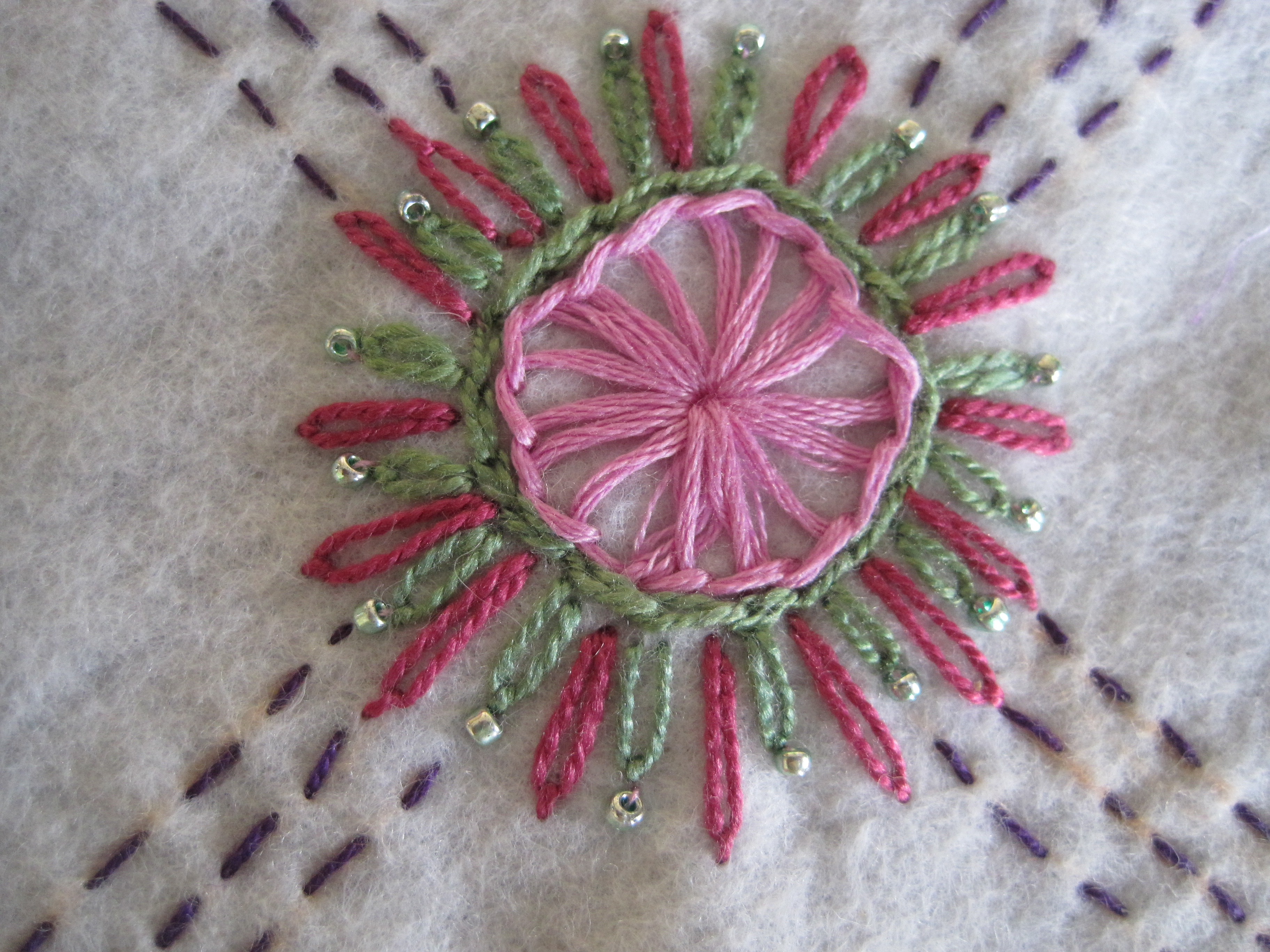
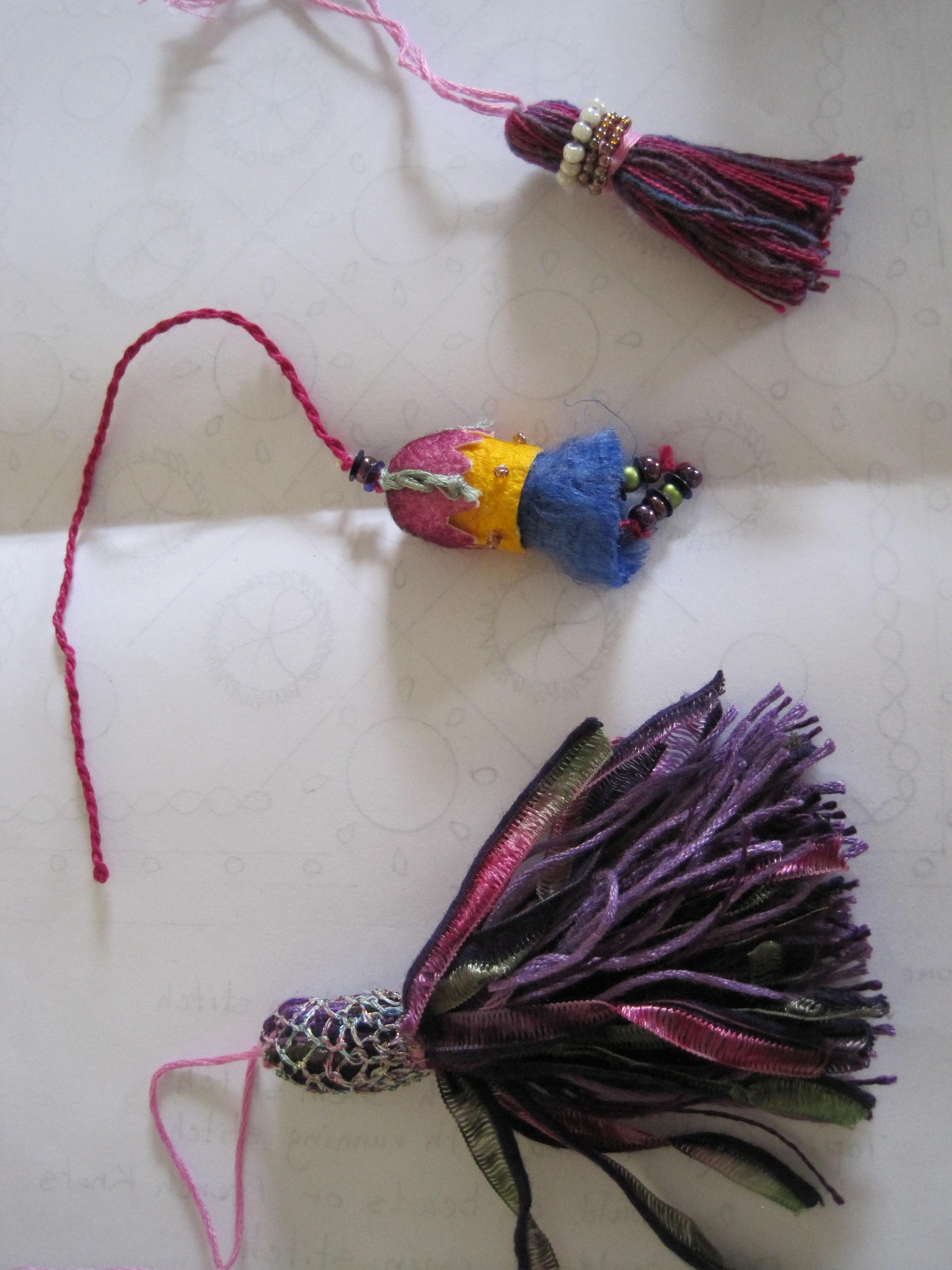
My workshop on Artful Embellishments involved adding embroidery, beading, buttons, mirrors and ribbons on a felt square that will be folded into a style of Indian Bride Dowery Bag, used by brides to carry their own personal treasures into the marriage.  We also worked on making various types of tassels.  After two days in class and a couple of hours working while volunteering this is how far I got:

IMG_3370  IMG_3373  IMG_3372

So I definitely have some homework required to complete the bag, but no stress.   It’s fun and relaxing, and a change from weaving.

Still, a good part of the fun of going to a conference is meeting new people with similar interests and being inspired by the work of others.  This was a small and intimate conference which met those goals.  Now I’m looking forward to the full conference in Victoria in 2017.

Posted in Weaving | Tagged , , , , , , , , , , , , | 4 Comments

September Towel – Turned Monk’s Belt

With Turned Monk’s Belt both the background and the pattern threads are contained in the warp and this weave thus requires only one shuttle to weave the weft.  The pattern will appear as vertical stripes in the finished towels.

I’m using up my stash on hand, so for the background, in 2/8 cotton, I chose a rust colour.  The pattern threads will be some autumn coloured 2/8 cottons.  I think this will represent Autumn well.

IMG_3334

Here is the yarn wrapping for the stripe colours

IMG_3337

The towel will be plain weave in the background colour, rusty red, and there will be two vertical strip sections in Turned Monk’s Belt.  Sett at 20 epi for the plain weave sections, (borders, Centre and 10 thread sections in the stripe) and 40 epi in the pattern sections.  Thread the coloured pattern threads in the same dent as the corresponding background thread, but through separate heddles.  The background threads are on shafts 1 and 2 and the pattern threads are on shaft 3 for Block A and Shaft 4 for Block B.

The profile draft for the stripe sections is:

Monksbelt profile draft

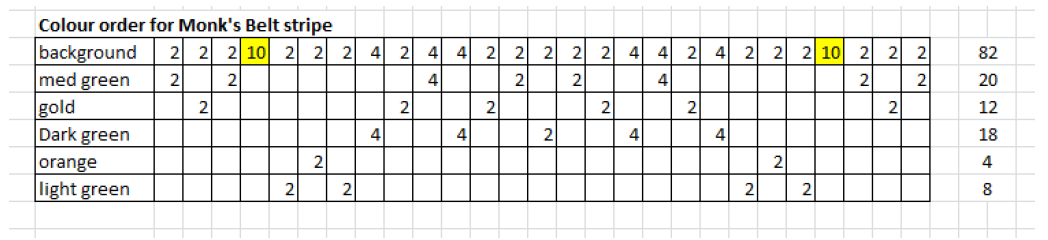
And the colour order for the stripes is:

Monksbelt colour order

The threading plan will be:

Border – 50 ends background; Stripe section – 82 ends background and 62 ends pattern; Centre – 140 ends background; Stripe section -82 ends background and 62 ends pattern ; Border – 50 ends background

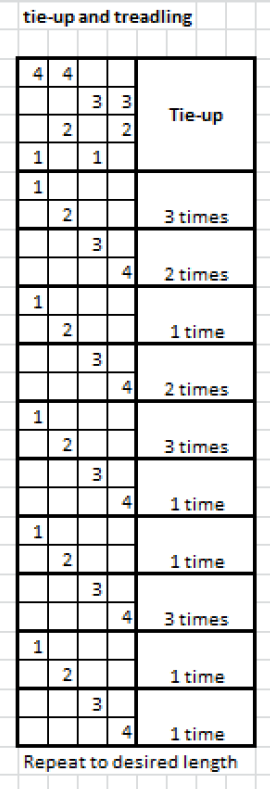
And the tie-up and treadling.

Monksbelt tie up and treadling

Posted in Weaving | Tagged , , , , , , , , | 4 Comments

August Towels Completed at Last

August was a month of travelling as well as hot, hot, dry days with severe watering restrictions that destroyed my lawn and garden.  Then the last three days brought in a strong and windy storm that knocked over trees with dry rootballs and a 40 hour power outage at my home and studio.  The storm and wind blew off our neighbour’s skylight which landed not ten feet from my husband who was tying down our canopy over the hot tub.  the canopy ended up getting ripped to sheds anyway.

Luckily for weavers and spinners we have low tech crafts, that we can continue as long as we have daylight.  I only had to wait for the power to come back on so that I could wash and iron the August towels.  And so, without further ado, I present the completed towels here:

IMG_3317

On the loom, you can see the spacing made by sleying 2/2/2/2/1 in a 12 dent reed to achieve 18 epi

IMG_3319     IMG_3322

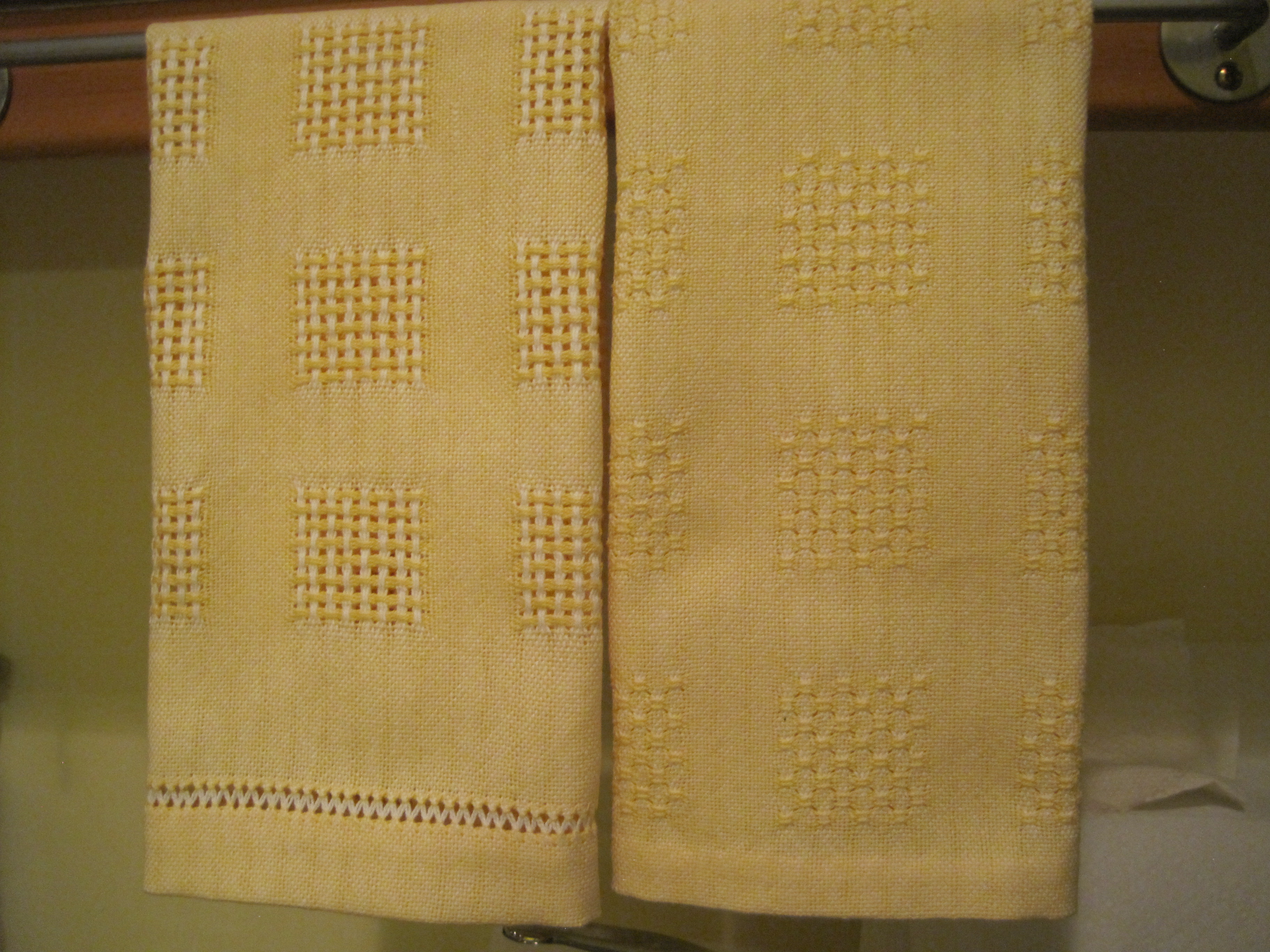
Huck Lace on the left and Huck Spots on the right.

IMG_3324  IMG_3325

In creamy natural colour and sunny yellow.  Woven on four shafts on my Ashford table loom.


Posted in Weaving | Tagged , , , , , , , , , , , , | 4 Comments

Spinning in Edenvale

Last week I spent three days in spinning bliss at the annual Peace Arch Weavers and Spinners Guild retreat at the Edenvale Retreat and Conference Centre in Abbotsford.  Set in a beautiful country setting I had a great time relaxing with 24 similarly-minded spinners.  My room-mate, Linda, and I arrived at 2 pm on Wednesday, set up our wheels in the meeting room and stowed our suitcases in our bedroom.  Cheese and crackers were set up in welcome refreshment.  Spinners kept arriving, and we created a big circle around the room.  Lynne arrived with huge buckets of her beautifully hand-dyed fibres for sale.

IMG_3291

I bought some yak and silk called “Afterglow” to play with. Later in the evening we had a giant show and tell, and Thursday and Friday we carded crazy batts from a selection of 15 different colours.

IMG_3298

Edenvale is a magical place.  It is set in a country house with beautiful gardens and a walking trail through the woods.  Once you cross the threshold the pace of life…just…slows…down.  For the next two days, my only chores were to sit, spin, chat, laugh, and eat.  The slowed pace is an invitation to find a place of renewal, reflection and restoration of life’s order.  I think we all were touched by this magic spell.

On to the eating, this is the best part.  The kitchen staff serve up wonderful nutritious meals, starting with baked salmon and Asian salad for our first dinner.  The leftovers were later translated into salmon crunch pie with squash soup for our last lunch.  Not to mention the delicious homemade desserts and cookies.  Oh, the joy of waiting to be called to dinner with no preparation and no dishes to do!

I still like to be the first one up in the morning.  That first hour of the day is so precious to me: sitting at my wheel, looking out the window as the day awakens, alone, calm, and reflective.  The spinning wheel whispers as the fibre moves through my hands.  I hear the first birds chirping their hello to the day.  A bunny hops across the lawn, pauses, lifts her head to sniff the air, then moves on.  As the wheel keeps turning I take the time to order my day and give thanks for all the good things in my life, and in this moment.  The house begins to stir and other spinners step into the room to greet me with smiles and hugs.  We move on to breakfast and the joy of conversations and connections with friends old and new.

Posted in Spinning, Travel | Tagged , , , , , , , , , , , , | Leave a comment

August Towels

The towels for August are based on Huck Lace.  Using a design layout similar to the towels for June, this gives me a great opportunity to investigate the differences between Atwater Bronson Lace and Huck Lace.  And I will also be able to investigate the differences between Huck Lace and Huck Weave (spots), which uses the same threading, but different treadling.  So, I will weave at least two towels, one in Huck Lace, and one in Huck Weave.

I will be using good old 2/8 cotton, in natural colour, sett at 18 ends per inch.

This pattern, like the others in this series is based on the article  “Weaving Towels as a Means of Learning the Basic Four-Shaft Weaves”, by Clotilde Barrett, Weavers Journal, Fall 1983, Volume VIII, Number 2, Issue 30, pages 11- 19.  The link is: https://www.cs.arizona.edu/patterns/weaving/periodicals/wj_30.pdf

I’m having a lot of fun playing with these weaves, and the monthly deadline keeps me motivated.

My changes to the draft are shown below:

Aug draft picture


Posted in Weaving | Tagged , , , , , , , , | 4 Comments

July Towels Finished

Despite being away from home on an awesome camping trip down the Oregon coast, then on to California and Arizona, I managed to finish the July towels.

IMG_3284IMG_3288

Three distinct towels on the same 4 yard warp.  Following Jane Stafford’s rule of thirds, I warped the first third in wider stripes and the other two thirds in narrow stripes.  So, depending on how you fold the towels into thirds for display, you have two unique looks.

For the first towel, I used the same colours as the warp, weaving wide stripes then narrow stripes  following the colour order of the warp.

IMG_3280

IMG_3287

The second towel was woven with just the sand colour.

IMG_3281    IMG_3285

For the third towel I chose a lighter grey and a brighter blue to soften the colours and to give it a more summery look

IMG_3282    IMG_3286

Meanwhile, the camping trip was perfect.  The first week, the whole family stayed at Nehalem Bay state park, just south of Cannon Beach.  With sun and sand, children and grandchildren, campfires and our family chefs, we had a great time, and delicious food, including Jambalaya, campfire apple crisp, and s’mores cooked with fruit, marshmallows, and chocolate in waffle bowls over the campfire.  Hayden, at age 10, was a star as assistant chef.

The second week, Ron and I headed south as the family headed back home.  We visited San Francisco and the Napa Valley.  we took the ferry across to San Francisco so we didn’t have to worry about driving in the city.  Rode the double-decker  bus across the Golden Gate Bride and nearly lost my hat.  The wind was exhilarating! We had lunch in Chinatown and walked around the shops.

The next day we went to the Napa Valley and enjoyed the vineyards and tastings.  Then on to Palm Springs, and then to Phoenix.  It was hot, hot, hot.  Good summer memories.


Posted in Travel, Weaving | Tagged , , , , , , , , , | 4 Comments

July Towels – A Day at the Beach

OK, I’m going totally off book on this one.  The original article has the July Towels in red, white, and blue in the same rosepath draft that was used for the April towels.

So first, I decided that I didn’t want to do rosepath again, and thought about a nice goose-eye twill.  Then I saw this pretty little twill draft, and that’s what I am going to use.  It has  nice diamond twill shapes with some short floats in the centres.  Pretty, and still done on four shafts, which is part of the criteria.

Towel draft


Next the question of colours.  I thought about red, white and blue to celebrate the Fourth of July, with our American friends. Or just red and white, to celebrate Canada Day (July 1st).  But one of the criteria I set for this series of towels is to use up the stash on my studio shelves, a sort of yarn and fibre diet.  So, checking my shelves, I have very little white cotton left, and I did not have the right shades of red and blue.
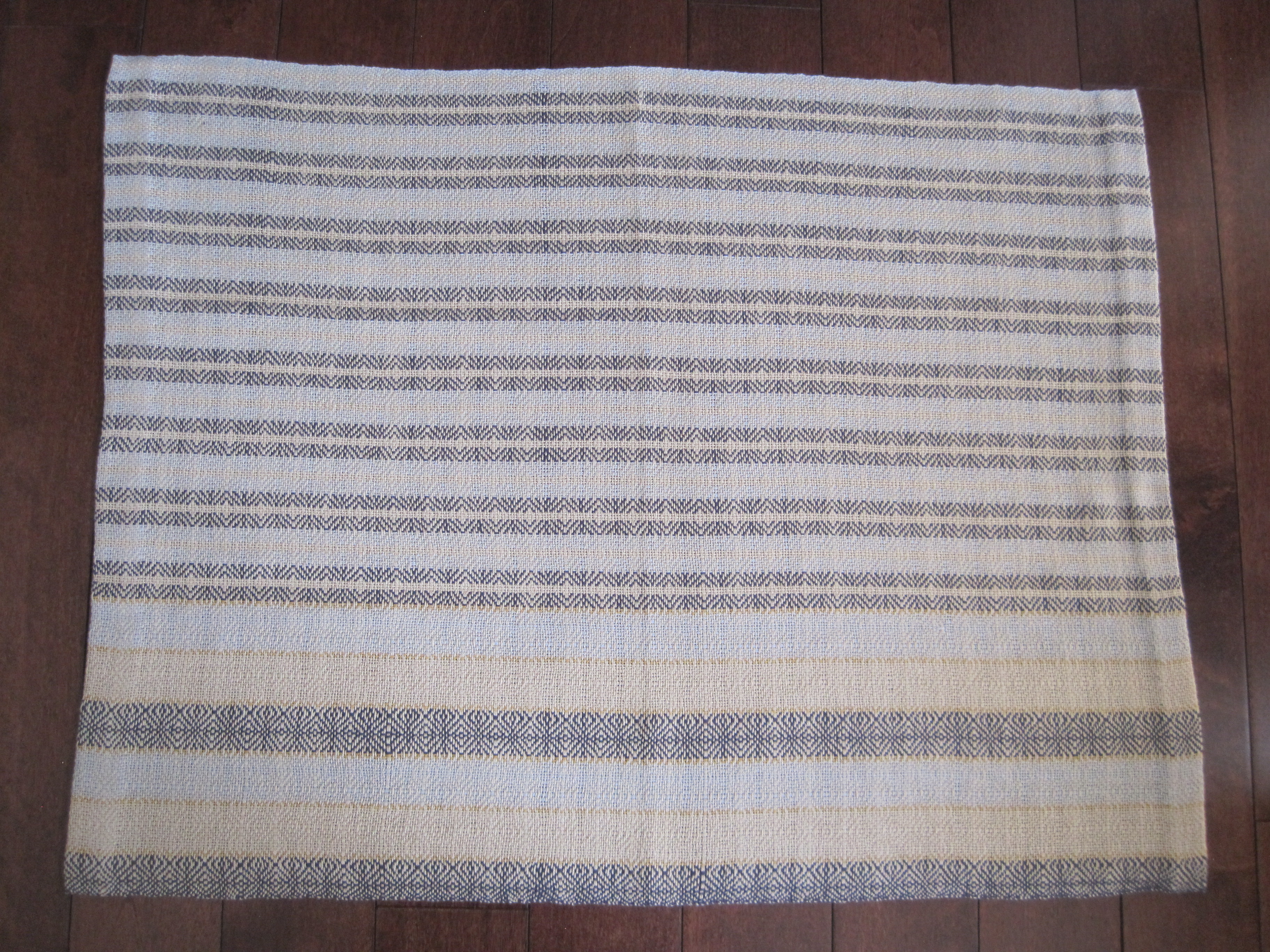
Then, through serendipity, I was browsing through Ravelry and  came across the Summer Weave Along on the Jane Stafford Group.  The picture shown to inspire summer weaving is a beautiful beach scene, with water, sand, clouds and grasses.  That’s it! I cried.  So these colours from my shelf are going in to the towels.  Light sand colour for the beach, gold for the golden sunlight, grey for the clouds, and a light blue grey for the water and sky.

IMG_3137


Let the winding of the warp begin.


Posted in Uncategorized | Tagged , , | 8 Comments

June Towels – Washed, Pressed, Hemmed

The June towels are hot off the loom, and washed, pressed and hemmed.  I really like the elegance of the little lace squares, the ladder hemstitching and the naturally coloured cotton.

IMG_3141  IMG_3138  IMG_3143  IMG_3142

I wish you could touch them.  They have a lovely soft drape.  There are four towels in all, two in naturally coloured green and two in a light brown/green blend.

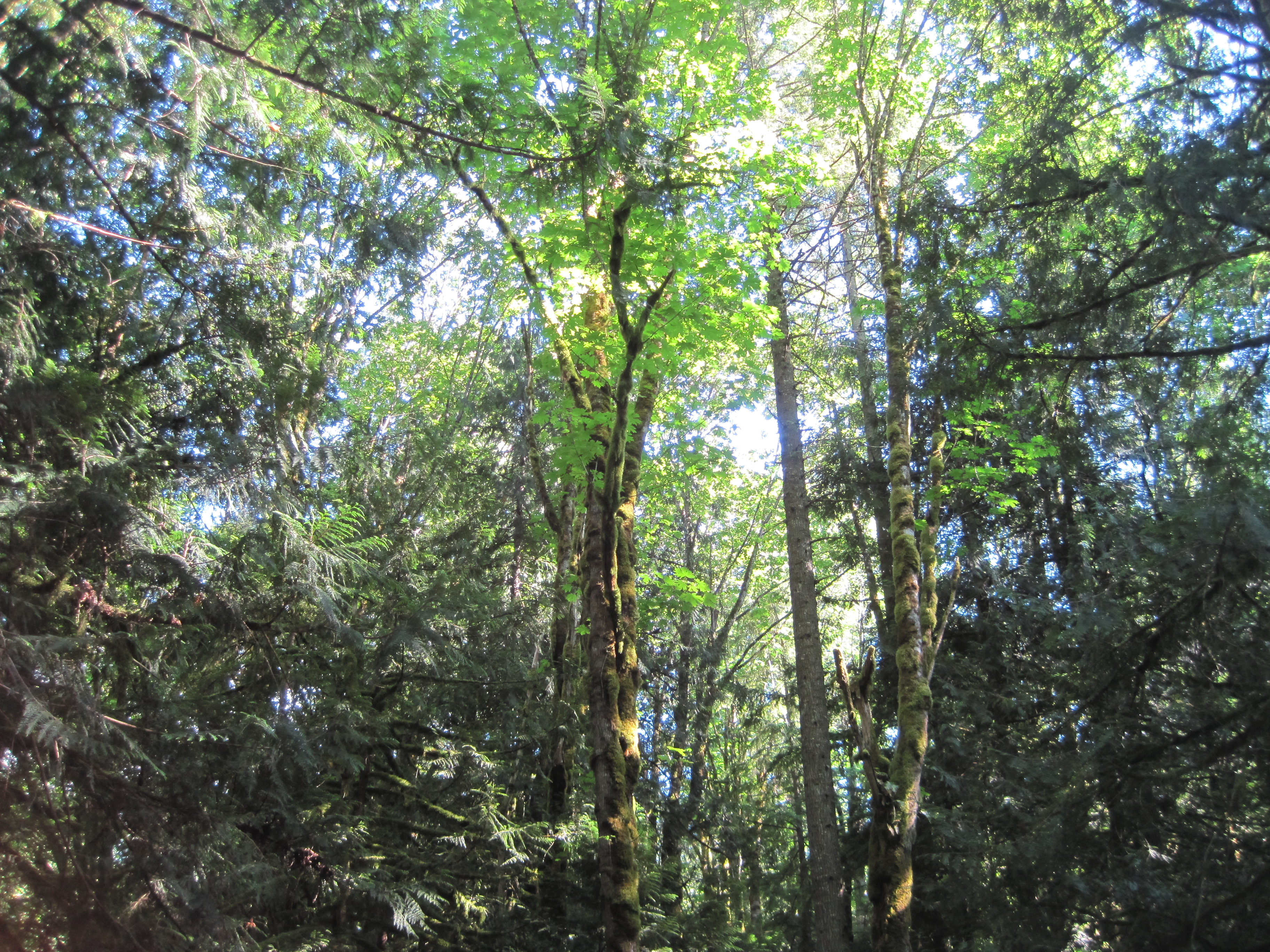
Ron and I spend a few days earlier in the month camping at Cultus Lake, the provincial campground about 1.5 hrs out of town.  We went before the schools let out for the summer. It was more busy on the weekend, but during the weekdays we were the only campers in our section, so it was very quiet.  Our camp spot was nestled in among the trees of the old forest.  So calm and serene.  I imagined being a forest sprite, flitting among the trees.  As I laid my hand on their trunks, each moss covered tree told its own story.  Oh the adventures they had over so many years, first as young saplings, then stately adults, and finally as wise and gnarled elders.  I enjoyed the cool, dark shadows, and the sunlight as it dappled through the high leaves.

IMG_3115  IMG_3112  IMG_3108  IMG_3117

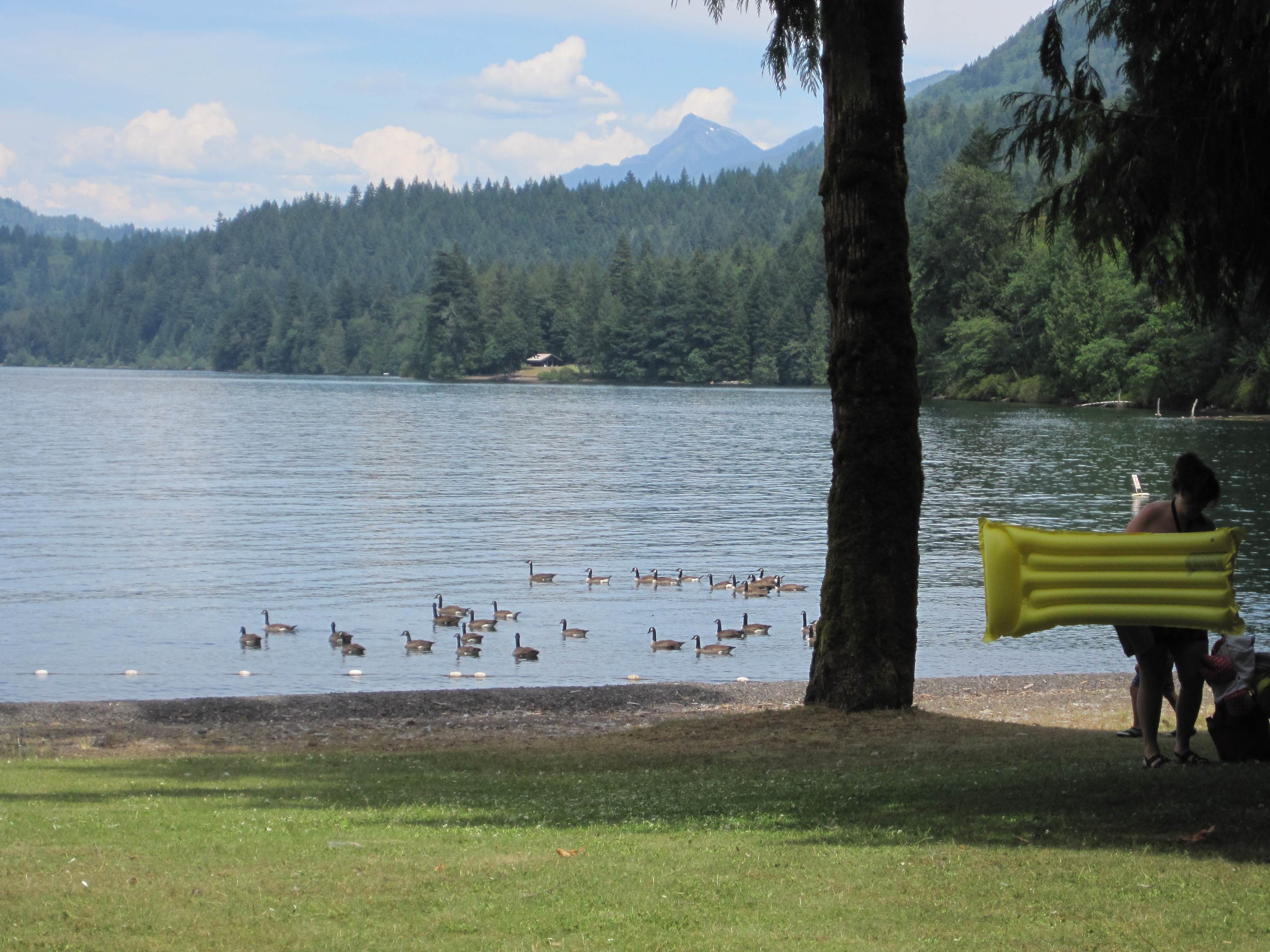
In the afternoons we made our way to the lake, to enjoy the sunshine warming our bones, and being investigated by the passing geese.

IMG_3118  IMG_3125


Nice to have a mini-vacation so close to home.

Posted in Weaving | Tagged , , , , , , , , , , , , | 5 Comments